 សទ្ទានុក្រម · ថ្លៃជួញដូរ
Slippage
ខ្លឹមសារនេះមានតែជាភាសាអង់គ្លេសសិន។
Slippage is the gap between the price you asked for and the price you got. It happens when the market moves before execution, most often around news, the daily rollover and the weekly open, and it can go for or against you.
Unlike the spread, slippage does not show on the quote before you trade. You see it afterwards, comparing the price you requested with the fill.
The slippage lesson goes deeper, order type by order type.
Why orders slip
Prices change many times a second. Between your click and the fill, the best price can move, further in a fast market.
Thin liquidity adds to it. Each price has a limited volume behind it, so a large order can use up the best price and fill the rest at the next one.
A market order can slip either way. A stop order, including a stop loss, becomes a market order when triggered, so it can fill past its level.
A limit order fills at your price or better, so it never slips against you. The cost is that it may not fill at all.
A worked example
You send a buy for 1 lot of EUR/USD at an ask of 1.11613, a real Exness Standard quote from 29 October 2026. The fill, illustrative here, comes back at 1.11618.
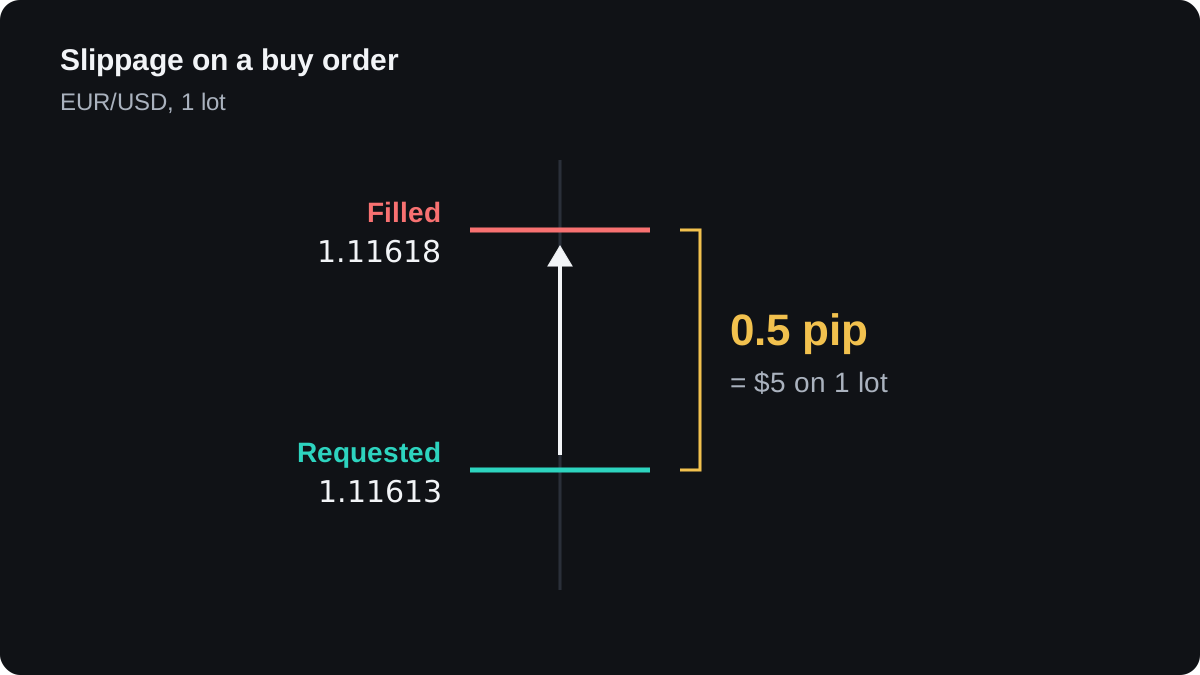
The gap is 1.11618 minus 1.11613 = 0.00005, or 0.5 pip. On 1 lot, where a pip is worth $10, that is 0.5 × $10 = $5 of negative slippage.
Slippage is a cost of its own, separate from spread and commission, and it does not change a per-lot rebate.
សំណួរ
Is slippage a sign that my broker is cheating?
Not on its own. Slippage is normal when markets move fast, but if every fill slips against you even in quiet hours, ask the broker how it executes orders.
How do I reduce slippage in forex?
Use limit orders when the exact price matters, and avoid opening trades just after major news or around the daily rollover.
Leverage multiplies losses as well as gains; only trade money you can afford to lose.
ពាក្យផ្សេងទៀតក្នុងជំពូកនេះ
 CommissionCommission is a fixed fee per lot charged on top of a thin spread. Raw and zero spread accounts are the main ones that charge it. It is quoted per side, for opening or for closing, or per round turn, which covers both, and it is due win or lose.
 Swap (overnight fee)Swap is the interest you pay or earn for holding a position past the daily rollover. Rollover falls at 17:00 New York time. The amount comes from the interest rate gap between the two currencies plus the broker's markup, and Wednesday usually counts three nights.
 Raw spread accountA raw spread account has a near-market spread and charges a commission per lot instead. Brokers call these accounts Raw, Raw Spread, Zero or ECN. Whether one is cheaper depends on the symbol you trade.
រៀនលម្អិតក្នុងមេរៀន
ពាក្យពាក់ព័ន្ធ