Leverage ក្នុង Forex ជាអ្វី?
Leverage អនុញ្ញាតឲ្យអ្នកគ្រប់គ្រង position ដែលធំជាងប្រាក់តម្កល់របស់អ្នកច្រើនដង។ នៅ 1:100 រាល់ Margin $1 កាន់រូបិយប័ណ្ណ $100 ដូច្នេះ position $110,000 ត្រូវការ $1,100។ Leverage កំណត់ថា Margin ប៉ុន្មានត្រូវបានចាក់សោទុក មិនមែនកំណត់ថា pip មួយមានតម្លៃប៉ុន្មានទេ។ ហានិភ័យពិតរបស់អ្នក មកពីទំហំ position ដែលអ្នកជ្រើស។

បើគ្មាន Leverage ទេ EUR/USD មួយ lot ស្តង់ដារ នឹងត្រូវការប្រាក់ច្រើនជាង $100,000 ក្នុងគណនីរបស់អ្នក។ ជាមួយ Leverage ប្រាក់ពីរបីរយដុល្លារ អាចបើកការជួញដូរដដែលនោះបាន។ នោះហើយជាទាំងភាពទាក់ទាញ និងគ្រោះថ្នាក់ទាំងមូលរបស់វា។
Leverage ដំណើរការយ៉ាងដូចម្តេច?
Leverage ត្រូវបានសរសេរជាសមាមាត្រ ដូចជា 1:100។ វាមានន័យថា $1 នីមួយៗដែលអ្នកដាក់ជា Margin គ្រប់គ្រង position $100។ Broker កាន់ Margin នោះជាប្រាក់តម្កល់ ខណៈការជួញដូរកំពុងបើក។
យក EUR/USD 0.10 lot នៅតម្លៃឧទាហរណ៍ 1.10000។ position នេះមានតម្លៃ 10,000 × 1.10000 = $11,000។ នៅ 1:100 អ្នកត្រូវការ Margin $11,000 ÷ 100 = $110 ដើម្បីបើកវា។
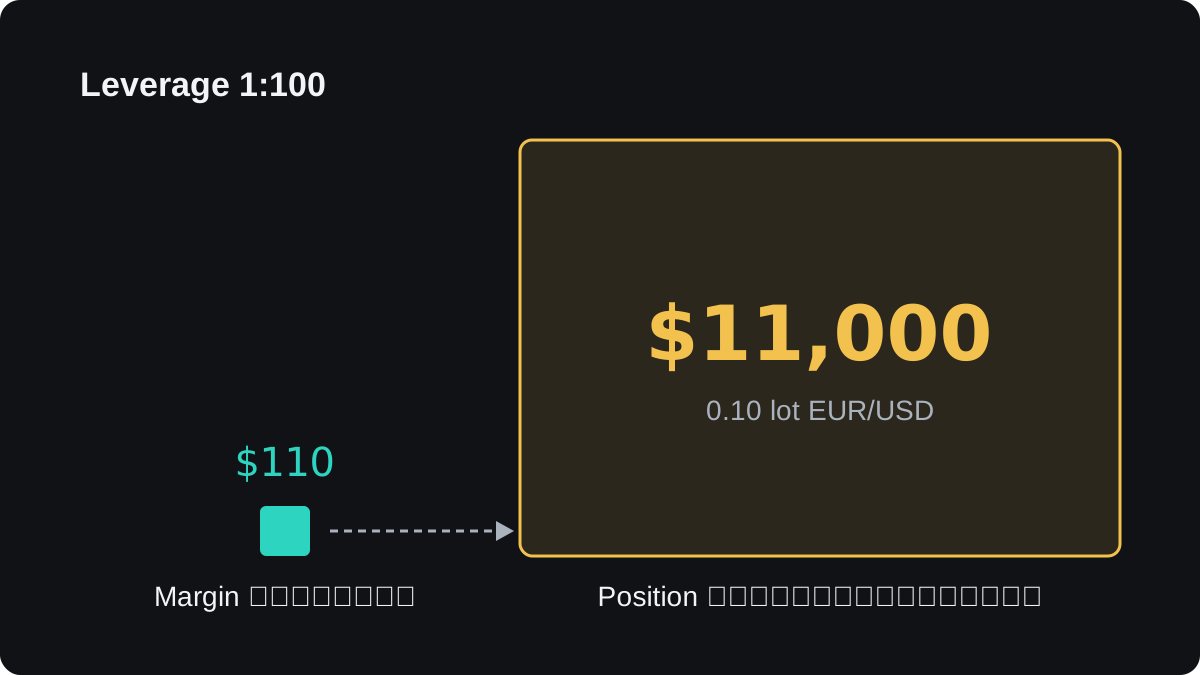
អ្នកមិនដែលទទួលបាន $10,900 ដែលនៅសល់នោះទេ។ ការជួញដូរ Forex រាយត្រូវបានទូទាត់ជាសាច់ប្រាក់ ដូច្នេះមានតែចំណេញ ឬខាតប៉ុណ្ណោះ ដែលចូល ឬចេញពីគណនីរបស់អ្នក។
Leverage, Margin និងទំហំ position
លេខបីត្រូវបានភ្ជាប់គ្នាដោយរូបមន្តតែមួយ៖
Margin = តម្លៃ position ÷ Leverage
ដូច្នេះអត្រា Margin គឺ 100 ÷ Leverage គិតជាភាគរយ។ នៅ 1:100 Broker សុំ 1% នៃ position ហើយនៅ 1:500 វាសុំ 0.2%។
នេះជាអ្វីដែល EUR/USD មួយ lot ស្តង់ដារ នៅ 1.10000 ដែលមានតម្លៃ $110,000 ត្រូវការ តាមការកំណត់ផ្សេងៗ៖
| Leverage | អត្រា Margin | Margin សម្រាប់ 1.00 lot |
|---|---|---|
| 1:30 | 3.33% | $3,666.67 |
| 1:100 | 1% | $1,100 |
| 1:500 | 0.2% | $220 |
| 1:2000 | 0.05% | $55 |
ការកំណត់ក្នុងគណនីរបស់អ្នក មិនតែងតែជា Leverage ដែលអ្នកទទួលបានពិតទេ។ Broker ជាច្រើនអនុវត្ត Leverage ទាបជាង លើ position ធំណាស់ លើឧបករណ៍ខ្លះ ឬក្នុងម៉ោងជុំវិញព័ត៌មានធំៗ និងចុងសប្តាហ៍។
កម្មវិធីគណនា Leverage គណនាលេខទាំងនេះសម្រាប់គូ ទំហំ និងរូបិយប័ណ្ណគណនីណាមួយ។ Margin ជាអ្វី និងអ្វីកើតឡើងពេលវាមិនគ្រប់ គឺជាប្រធានបទនៃ Margin និង Stop out។
Leverage មិនប្តូរតម្លៃ pip ទេ
នេះជាចំណុចដែលអ្នកចាប់ផ្តើមភាគច្រើនមើលរំលង។ EUR/USD មួយ lot ប្រែប្រួល $10 ក្នុងមួយ pip មិនថា Leverage របស់អ្នកជា 1:30 ឬ 1:2000 ទេ។ Leverage គ្រាន់តែប្តូរចំនួន Margin ដែលត្រូវបានចាក់សោទុក ខណៈការជួញដូរកំពុងបើក។
ចំណេញ និងខាតរបស់អ្នក មកពី ទំហំ lot។ Leverage ខ្ពស់ជាង អនុញ្ញាតឲ្យអ្នកបើក lot ធំជាង ដោយប្រាក់ដដែល ហើយនោះហើយជាកន្លែងដែលគ្រោះថ្នាក់ចាប់ផ្តើម។
Leverage ពិត៖ លេខដែលសំខាន់
Leverage ពិត ប្រៀបធៀបអ្វីដែលអ្នកកំពុងបើក ជាមួយអ្វីដែលអ្នកមាន៖
Leverage ពិត = តម្លៃ position សរុប ÷ Equity របស់គណនី
ឧបមាថាអ្នកមាន $1,000 ហើយទិញ EUR/USD 0.50 lot នៅ 1.10000។ position នេះមានតម្លៃ $55,000 ដូច្នេះ Leverage ពិតរបស់អ្នកគឺ 55,000 ÷ 1,000 = 55:1 មិនថាការកំណត់គណនីរបស់អ្នកនិយាយថាប៉ុន្មានទេ។
នៅ 55:1 ចលនាតម្លៃ 1% ធ្វើឲ្យអ្នកខាត 55% នៃគណនី។ ចលនា 1% ពី 1.10000 គឺ 110 pip ហើយ 110 pip × $5 ក្នុងមួយ pip = $550។
ចលនាបែបនេះមិនមែនកម្រទេ។ នៅថ្ងៃទី 29 ខែតុលា ឆ្នាំ 2026 រហូតដល់ម៉ោង 16:35 UTC EUR/USD បានជួញដូររវាង 1.11152 និង 1.11710 រួចទៅហើយនៅថ្ងៃនោះ ជាចន្លោះប្រហែល 0.5%។
ក្រាហ្វបង្ហាញគណនី $1,000 ដដែល ដែលប្រឈមនឹងចលនា 50 pip បញ្ច្រាសដដែល នៅទំហំ position បួនផ្សេងគ្នា។
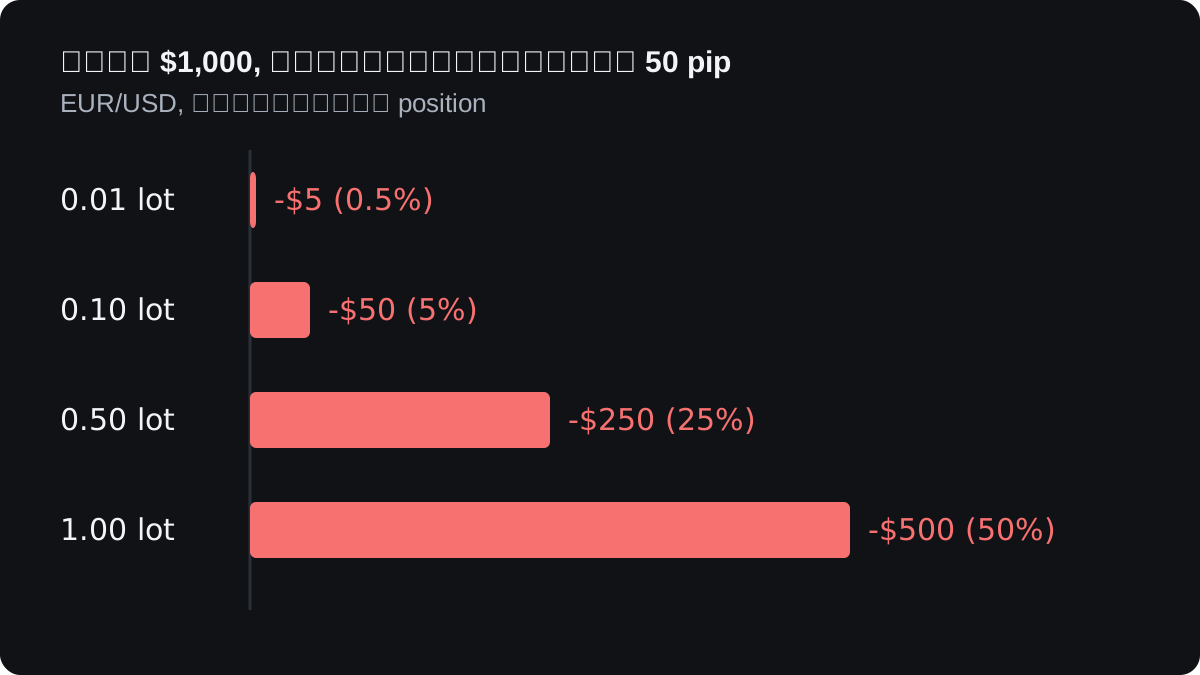
សូមកត់សម្គាល់របារចុងក្រោយ។ នៅ 1:100 ការជួញដូរ 1.00 lot នឹងត្រូវការ Margin $1,100 ច្រើនជាងប្រាក់ដែលគណនីមាន។ មានតែការកំណត់ខ្ពស់ជាងនេះឆ្ងាយ ទើបធ្វើឲ្យការជួញដូរនោះអាចធ្វើទៅបាន។
ហេតុអ្វី Leverage មានហានិភ័យ?
Leverage ពង្រីកការខាត ក្នុងសមាមាត្រដូចគ្នាបេះបិទនឹងចំណេញ។ position ដែលធំពេកសម្រាប់គណនី អាចខាតផ្នែកធំនៃគណនីនោះ ដោយចលនាតម្លៃធម្មតាមួយ។
ក្នុងទីផ្សារដែលប្រែប្រួលលឿន Stop Loss ក៏អាចត្រូវបានបំពេញនៅតម្លៃអាក្រក់ជាងកម្រិតរបស់វា ដែលហៅថា slippage។ position កាន់តែធំ pip slippage បន្ថែមនីមួយៗកាន់តែមានថ្លៃ។
និយតករខ្លះកំណត់ពិដាន Leverage សម្រាប់អតិថិជនរាយ ដោយសារហេតុផលនេះ។ ឧទាហរណ៍ នៅសហភាពអឺរ៉ុប Leverage រាយលើគូរូបិយប័ណ្ណចម្បង ត្រូវបានកំណត់ត្រឹម 1:30 ហើយនៅសហរដ្ឋអាមេរិក ត្រឹម 1:50។
Broker ជាច្រើននៅក្រៅតំបន់ទាំងនោះ ផ្តល់ការកំណត់ខ្ពស់ជាងនេះឆ្ងាយ។ សូមសួរពីការការពារសមតុល្យអវិជ្ជមាន (negative balance protection) ផងដែរ៖ នៅកន្លែងដែលវាអនុវត្ត ការខាតរបស់អ្នកមិនអាចលើសប្រាក់ក្នុងគណនីរបស់អ្នកបានទេ។
របៀបជ្រើសការកំណត់ Leverage របស់អ្នក
ចាត់ទុក Leverage ជាពិដាន មិនមែនជាគោលដៅទេ។ កំណត់ទំហំការជួញដូរនីមួយៗពីហានិភ័យរបស់អ្នកជាមុនសិន បន្ទាប់មកពិនិត្យថា Margin ដែលវាត្រូវការ នៅទុក Free margin បានច្រើនគ្រប់គ្រាន់។
នេះជារបៀបដែលវាមើលទៅជាលេខ។ គណនី $1,000 ប្រថុយ 1% ឬ $10 ជាមួយ Stop 25 pip លើ EUR/USD ដូច្នេះទំហំគឺ $10 ÷ (25 × $10) = 0.04 lot។
នៅ 1.10000 ការជួញដូរនោះចាក់សោ Margin $44 នៅ 1:100 ឬ $8.80 នៅ 1:500។ ក្នុងករណីទាំងពីរ Stop ខាតចំ $10។ Leverage បានប្តូរ Margin មិនមែនហានិភ័យទេ។
Leverage ខ្ពស់ជាង ចាក់សោ Margin តិចជាងសម្រាប់ការជួញដូរដដែល ដែលទុកចន្លោះច្រើនជាង ដើម្បីទ្រាំការខាតជាប់ៗគ្នា។ បញ្ហាចាប់ផ្តើមតែពេលចន្លោះនោះត្រូវបានប្រើ ដើម្បីបើក position ធំជាង។
ទម្លាប់ជាក់ស្តែងមួយ៖ រក្សា Leverage ពិតឲ្យទាប ហើយដឹងពីកម្រិត Stop out របស់អ្នក មុនពេលបើកអ្វីទាំងអស់។ កម្មវិធីគណនា Margin បង្ហាញថាការជួញដូរមួយនឹងចាក់សោប៉ុន្មាន មុនពេលអ្នកដាក់វា។
សំណួរ
តើ Leverage 1:500 មានន័យដូចម្តេច?
Margin $1 នីមួយៗ គ្រប់គ្រង position $500។ EUR/USD មួយ lot ស្តង់ដារ នៅ 1.10000 ដែលមានតម្លៃ $110,000 នឹងត្រូវការ Margin $220។
តើ Leverage ខ្ពស់ជាង មានហានិភ័យជាងទេ?
មិនមែនដោយខ្លួនវាទេ ព្រោះតម្លៃ pip អាស្រ័យលើទំហំ lot មិនមែន Leverage ទេ។ វាក្លាយជាហានិភ័យជាង ពេលចន្លោះបន្ថែមនោះល្បួងអ្នកឲ្យបើក position ធំជាងអ្វីដែលគណនីរបស់អ្នកអាចទ្រាំបាន។
តើអ្នកចាប់ផ្តើមគួរប្រើ Leverage ប៉ុន្មាន?
គ្មានការកំណត់ត្រឹមត្រូវតែមួយទេ។ អ្វីដែលការពារអ្នកគឺ Leverage ពិតទាប ពោលគឺ position តូចធៀបនឹង Equity របស់អ្នក បូកនឹង Stop Loss លើគ្រប់ការជួញដូរ។
តើខ្ញុំអាចខាតច្រើនជាងប្រាក់ដែលខ្ញុំដាក់បានទេ?
វាអាស្រ័យលើ Broker របស់អ្នក និងកន្លែងដែលអ្នករស់នៅ។ ជាមួយការការពារសមតុល្យអវិជ្ជមាន គណនីរបស់អ្នកមិនអាចធ្លាក់ក្រោមសូន្យបានទេ។ បើគ្មានវា gap តម្លៃខ្លាំងមួយ អាចធ្វើឲ្យសមតុល្យអវិជ្ជមាន ដែលអ្នកត្រូវសង Broker វិញ។
បន្តរៀន
 ជំពូក 6What is margin trading?Margin trading means opening a position worth more than the money in your account. The broker sets aside part of your balance, the margin, as a deposit while the trade is open. Profit and loss are counted on the full position size, so small price moves change your balance much faster than the margin suggests.
 ជំពូក 6What is account balance in forex?Your account balance is the money in your trading account from deposits, withdrawals and closed trades, after booked costs such as commission and swap. It does not include open positions. While a trade is open the balance stays the same, and the floating profit or loss shows up in your equity instead.
 ជំពូក 6What is floating (unrealized) profit and loss?Floating profit and loss is the result your open trades would show if you closed them at the current price. It changes with every tick and moves your equity, while your balance stays the same. It becomes realized, and is added to or taken from your balance, only when the trade closes.
 ជំពូក 6Margin, កម្រិត Margin និង Stop out ក្នុង Forex ជាអ្វី?Margin គឺជាផ្នែកនៃប្រាក់របស់អ្នក ដែល Broker ចាក់សោទុកជាប្រាក់តម្កល់ ខណៈការជួញដូរប្រើ Leverage កំពុងបើក។ កម្រិត Margin គឺ Equity ចែកនឹង Margin ដែលបានប្រើ គុណនឹង 100%។ ពេលវាធ្លាក់ដល់កម្រិត Margin call របស់ Broker គណនីរបស់អ្នកនឹងត្រូវបានសម្គាល់ ហើយនៅកម្រិត Stop out Broker ចាប់ផ្តើមបិទ position របស់អ្នកដោយស្វ័យប្រវត្តិ។
 ជំពូក 6What is used margin?Used margin is the total amount your broker sets aside to keep all your open positions open. Each position's margin is its notional value divided by your leverage, and used margin adds them up. It is not a fee: the money returns to free margin when you close the trades.
 ជំពូក 6What is equity in a trading account?Equity is your account balance plus or minus the floating profit or loss of your open trades. It shows what the account would be worth if you closed everything at current prices. With no trades open, equity equals balance. Brokers use it to work out free margin, margin level and stop outs.
 ជំពូក 6What is free margin?Free margin is the money in your trading account that is not locked up as margin for open trades. It equals equity minus used margin. You need free margin to open new positions, and it falls as open trades lose and rises as they gain. At zero, your margin level is 100%.
 ជំពូក 6What is margin level?Margin level is your equity divided by your used margin, multiplied by 100 and shown as a percentage. It tells you how much cushion your open trades have. At 100%, equity equals used margin and free margin is zero. Brokers set their margin call and stop out levels on this number, and the levels differ between brokers.
 ជំពូក 6What is a margin call?A margin call is your broker's warning that your margin level, equity divided by used margin, has fallen to a set threshold such as 100%. You usually cannot open new trades from that point. The call closes nothing by itself. If losses continue, the broker's stop out level is where positions start to be closed for you.
 ជំពូក 6What is a stop out level?The stop out level is the margin level at which your broker starts closing your open positions automatically, often beginning with the largest loss. If your stop out level is 50%, closing begins when equity falls to half your used margin. It is meant to stop your account sinking further, though a price gap can still push it below zero.
 ជំពូក 6Margin call example: margin call at 100% with no separate stop out.When a broker sets the margin call and the stop out both at 100%, the warning and the forced close happen at the same moment. In this example, a $1,000 account buys 0.50 lot of EUR/USD with $550 of margin at 1:100, and the trade is closed after a 90 pip fall, a $450 loss.
 ជំពូក 6Margin call and stop out example: 100% and 50%.In this example a $2,000 account buys 1 lot of EUR/USD at 1.10000 with $1,100 of used margin. The margin call at 100% arrives when equity falls to $1,100, 90 pips lower at 1.09100. The stop out at 50% closes the trade when equity reaches $550, at 1.08550, a loss of $1,450.
 ជំពូក 6What happens if you trade forex with $100?With $100 and 1:100 leverage, 0.01 lot of EUR/USD at 1.10000 uses $11 of margin and can move about 890 pips against you before a 100% margin call. At 0.05 lot the margin call comes after 90 pips, and 0.10 lot cannot be opened at all. Trade size decides how much room you have.
 ជំពូក 6Why margin call and stop out levels differ between brokers.Margin call and stop out levels are set by each broker, often per account type, within any rules from the regulator that licenses the account. In this lesson's example, one trade is closed after 90 pips at one broker and after 178 pips at another, so look up your own levels before you trade.
 ជំពូក 6Margin cheat sheet.Balance is the cash from deposits, withdrawals and closed trades. Equity is balance plus the floating profit or loss on open trades. Used margin is the deposit your open trades hold, and free margin is equity minus used margin. Margin level is equity divided by used margin, times 100. A margin call warns; a stop out closes trades.
 ជំពូក 6How can you avoid a margin call?Margin level is your equity divided by your used margin, and a margin call comes when it falls to your broker's threshold. To stay clear, keep positions small compared with your equity, set stop losses that close losing trades long before that point, and leave plenty of free margin unused.

