Margin, កម្រិត Margin និង Stop out ក្នុង Forex ជាអ្វី?
Margin គឺជាផ្នែកនៃប្រាក់របស់អ្នក ដែល Broker ចាក់សោទុកជាប្រាក់តម្កល់ ខណៈការជួញដូរប្រើ Leverage កំពុងបើក។ កម្រិត Margin គឺ Equity ចែកនឹង Margin ដែលបានប្រើ គុណនឹង 100%។ ពេលវាធ្លាក់ដល់កម្រិត Margin call របស់ Broker គណនីរបស់អ្នកនឹងត្រូវបានសម្គាល់ ហើយនៅកម្រិត Stop out Broker ចាប់ផ្តើមបិទ position របស់អ្នកដោយស្វ័យប្រវត្តិ។

Margin គឺជាកន្លែងដែល Leverage ជួបនឹងគណនីពិតរបស់អ្នក។ រៀនលេខមួយក្តាប់តូចនៅខាងក្រោម terminal MetaTrader របស់អ្នក ហើយអ្នកនឹងដឹងជានិច្ចថា អ្នកនៅជិតការបិទដោយបង្ខំប៉ុណ្ណា។
Margin គឺជាប្រាក់តម្កល់ មិនមែនជាថ្លៃសេវាទេ
ពេលអ្នកបើកការជួញដូរប្រើ Leverage មួយ Broker ទុកប្រាក់របស់អ្នកមួយផ្នែកដោយឡែក ជា Margin។ ប្រាក់នោះមិនត្រូវបានចាយទេ។ អ្នកទទួលវាមកវិញពេលការជួញដូរបិទ បូក ឬដកលទ្ធផលនៃការជួញដូរនោះ។
Margin ដែលត្រូវការ កើតចេញពីទំហំ position និង Leverage របស់អ្នក៖
Margin ដែលត្រូវការ = តម្លៃ position ÷ Leverage
ឧទាហរណ៍មួយ ដោយប្រើតម្លៃគត់ៗសម្រាប់ជាឧទាហរណ៍៖ គណនី $1,000 នៅ 1:100 ទិញ EUR/USD 0.50 lot នៅ 1.10000។ position នេះមានតម្លៃ $55,000 ដូច្នេះ Margin គឺ $55,000 ÷ 100 = $550។
សមតុល្យ, Equity និង Free margin
terminal បង្ហាញលេខជាច្រើន ដែលស្តាប់ទៅស្រដៀងគ្នា ប៉ុន្តែមានន័យខុសគ្នា៖
- សមតុល្យ (Balance) គឺជាប្រាក់របស់អ្នក ពីការជួញដូរដែលបានបិទ ការដាក់ប្រាក់ និងការដកប្រាក់។ វាមិនគិតការជួញដូរដែលកំពុងបើកទេ។
- Equity គឺសមតុល្យ បូកនឹងចំណេញ ឬខាតដែលមិនទាន់បិទ (floating) នៃការជួញដូរដែលកំពុងបើក៖ តម្លៃរបស់គណនីនៅពេលនេះ។
- Margin គឺជាចំនួនដែលត្រូវបានចាក់សោដោយ position ដែលកំពុងបើក ដែលគេហៅថា Margin ដែលបានប្រើ (used margin) ផងដែរ។
- Free margin គឺ Equity ដក Margin។ វាផ្តល់ប្រាក់សម្រាប់ការជួញដូរថ្មី និងទ្រាំការខាតលើការជួញដូរដែលកំពុងបើក។
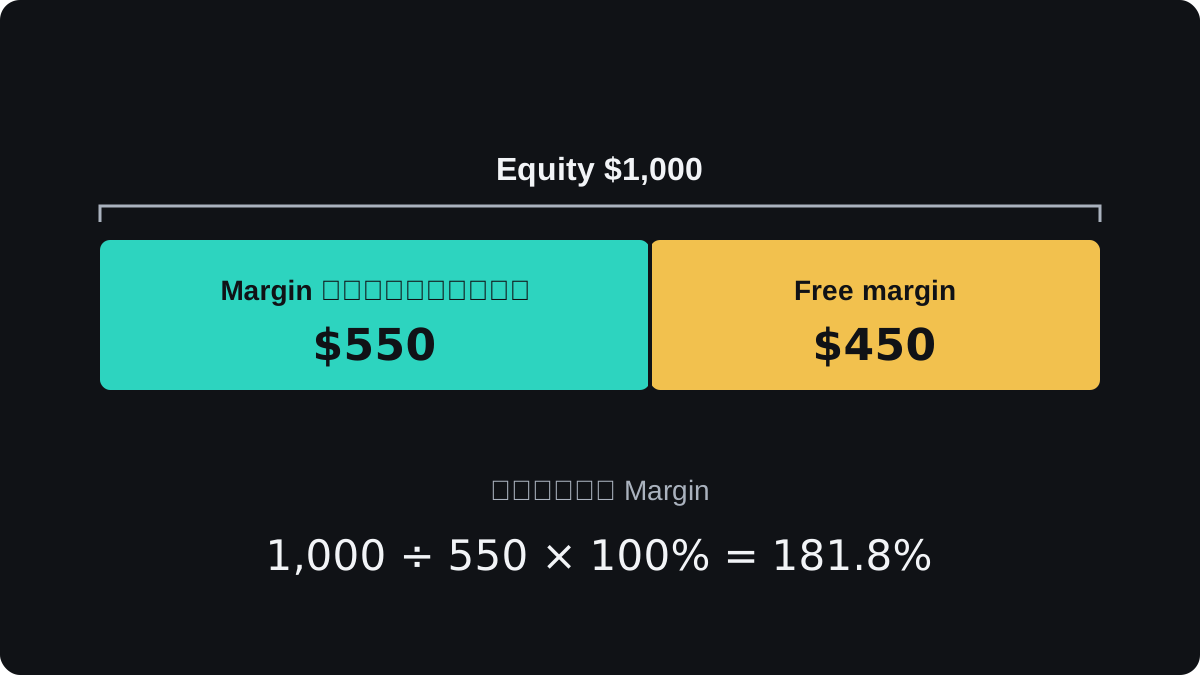
ភ្លាមៗក្រោយបើកការជួញដូរខាងលើ មុនពេលតម្លៃប្រែប្រួល សមតុល្យ និង Equity សុទ្ធតែស្មើនឹង $1,000។ Margin គឺ $550 ដូច្នេះ Free margin គឺ $1,000 ដក $550 = $450។
កម្រិត Margin ជាអ្វី?
កម្រិត Margin ប្រាប់អ្នកថា ការជួញដូរដែលកំពុងបើករបស់អ្នក ត្រូវបានធានាបានល្អប៉ុណ្ណា។ MetaTrader បង្ហាញវាជាភាគរយ៖
កម្រិត Margin = Equity ÷ Margin × 100%
ក្នុងឧទាហរណ៍ $1,000 ÷ $550 × 100% = 181.8%។ លេខកាន់តែខ្ពស់ អ្នកកាន់តែមានចន្លោះច្រើន។ បើគ្មានការជួញដូរណាកំពុងបើកទេ ក៏គ្មានកម្រិត Margin សម្រាប់បង្ហាញដែរ។
Margin call និង Stop out
Broker កំណត់ចំណុចកំណត់ពីរលើកម្រិត Margin។ Broker និងប្រភេទគណនីនីមួយៗ មានតួលេខរៀងៗខ្លួន ដែលមានចែងក្នុងលក្ខខណ្ឌគណនី។ មេរៀននេះប្រើ 100% និង 50% គ្រាន់តែជាឧទាហរណ៍ប៉ុណ្ណោះ។
- Margin call គឺជាកម្រិតព្រមាន។ គណនីត្រូវបានសម្គាល់ ហើយ Broker អាចទាក់ទងអ្នក។ នៅ 100% Free margin បានដល់សូន្យ ដូច្នេះគ្មានអ្វីនៅសល់សម្រាប់ការជួញដូរថ្មីទេ។
- Stop out គឺជាកម្រិតដែលប្រព័ន្ធរបស់ Broker ចាត់វិធានការ។ order រង់ចាំ (pending order) ត្រូវបានលុប ហើយ position ដែលកំពុងបើកត្រូវបានបិទ ជាធម្មតាចាប់ពី position ដែលខាតច្រើនជាងគេ រហូតដល់កម្រិតនោះងើបឡើងវិញ។
ឥឡូវតាមដានឧទាហរណ៍ ពេល EUR/USD ធ្លាក់។ position 0.50 lot ខាត $5 ក្នុងមួយ pip។ ដើម្បីឲ្យការគណនាសាមញ្ញ Margin ត្រូវបានរក្សានៅ $550។ នៅលើ Platform ពិត វាប្រែប្រួលបន្តិច ពេលតម្លៃអឺរ៉ូប្រែប្រួល។
| EUR/USD | pip ដែលបញ្ច្រាសនឹងអ្នក | ខាតមិនទាន់បិទ | Equity | កម្រិត Margin |
|---|---|---|---|---|
| 1.10000 | 0 | $0 | $1,000 | 181.8% |
| 1.09500 | 50 | $250 | $750 | 136.4% |
| 1.09100 | 90 | $450 | $550 | 100% (Margin call) |
| 1.08550 | 145 | $725 | $275 | 50% (Stop out) |
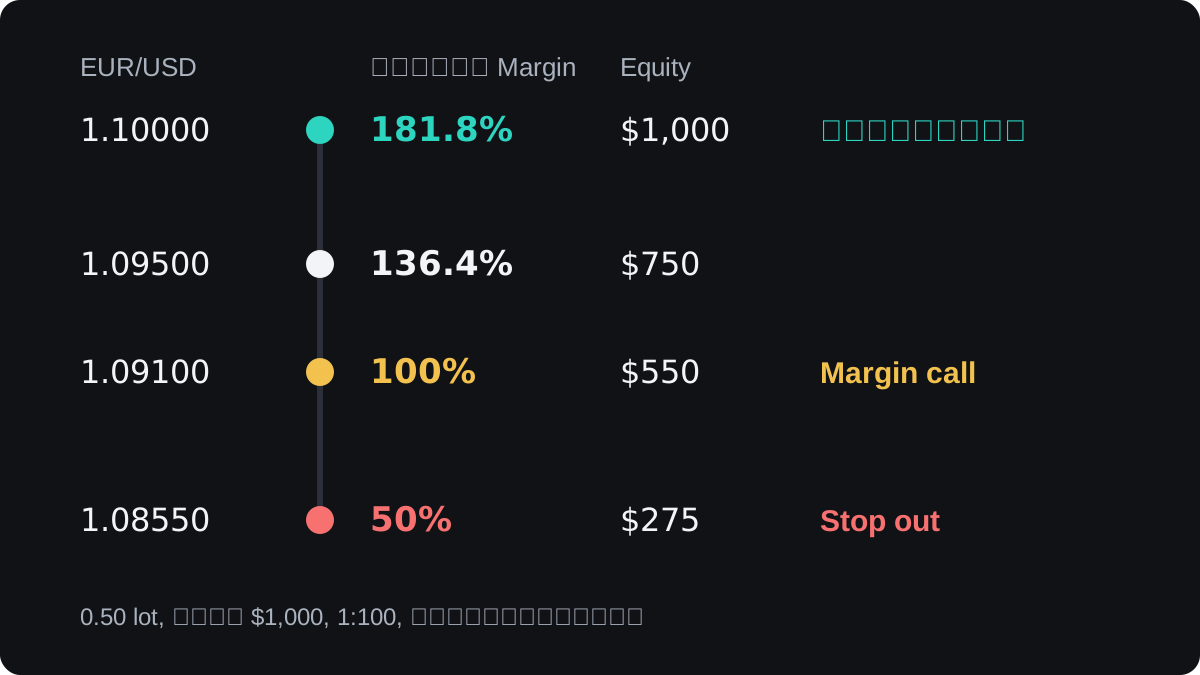
ការធ្លាក់ 145 pip ប្រហែល 1.3% គឺគ្រប់គ្រាន់ដើម្បីបិទការជួញដូរនេះ។ trader ខាត $725 ហើយនៅសល់ $275។
តម្លៃអាចប្រែប្រួលបានប៉ុន្មាន មុនពេល Stop out?
អ្នកអាចគណនាវាបាន មុនពេលជួញដូរ ដោយប្រើ តម្លៃ pip នៃ position របស់អ្នក៖
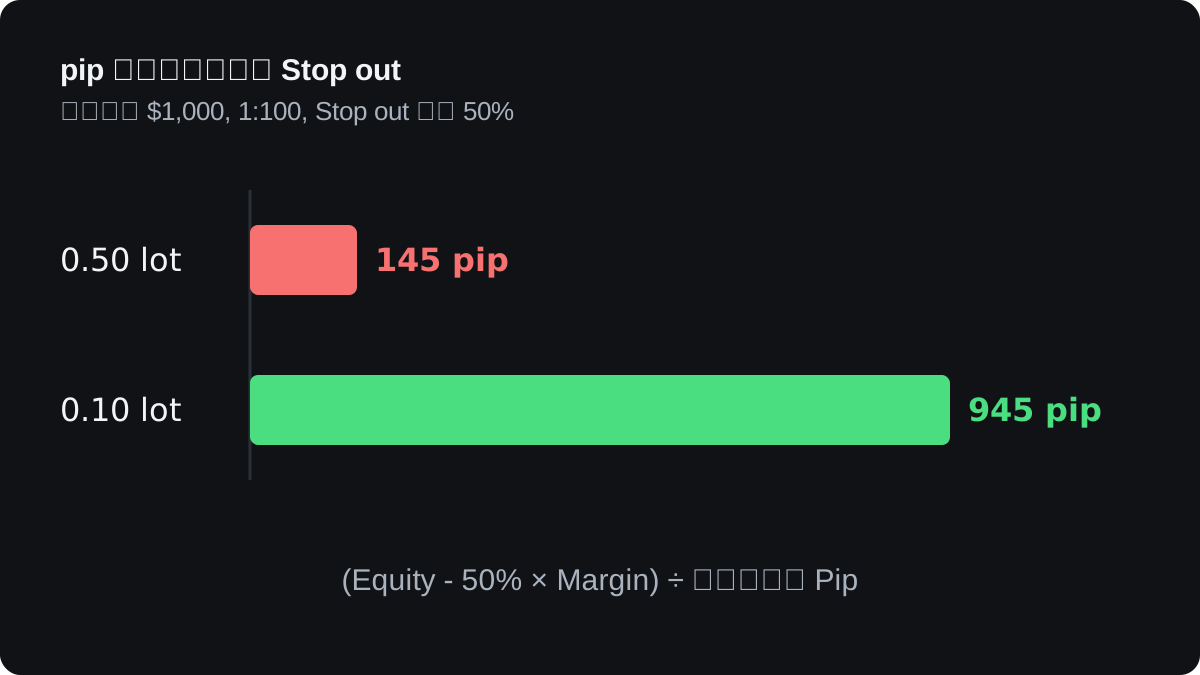
pip រហូតដល់ Stop out = (Equity ដក កម្រិត Stop out × Margin) ÷ តម្លៃ pip
សម្រាប់ឧទាហរណ៍៖ ($1,000 ដក 50% × $550) ÷ $5 = $725 ÷ $5 = 145 pip។ លទ្ធផលនេះត្រូវនឹងតារាង។
សាកគណនាដូចគ្នាសម្រាប់ 0.10 lot វិញ។ Margin គឺ $110 ហើយមួយ pip មានតម្លៃ $1 ដូច្នេះ ($1,000 ដក $55) ÷ $1 = 945 pip។ position តូចជាង ផ្តល់ចន្លោះដកដង្ហើមធំណាស់។
នេះក៏ជាមូលហេតុដែល Leverage ខ្ពស់ដោយខ្លួនវា មិនមែនជាគ្រោះថ្នាក់ទេ។ នៅ 1:500 ការជួញដូរ 0.50 lot នឹងចាក់សោតែ $110 ប៉ុណ្ណោះ ហើយ Stop out នឹងនៅឆ្ងាយ 189 pip ជំនួសឲ្យ 145។
គ្រោះថ្នាក់ពិត គឺការបើក position ធំជាង ព្រោះ Margin មើលទៅថោក។
របៀបនៅឲ្យឆ្ងាយពី Stop out
- កំណត់ទំហំការជួញដូរនីមួយៗពី Stop Loss ដូចក្នុង មេរៀនទំហំ lot ដើម្បីឲ្យ Stop ធម្មតាមួយ ខាតតែផ្នែកតូចនៃគណនី។
- តាមដានកម្រិត Margin មិនមែនតែចំណេញទេ។ ការជួញដូរជាច្រើនដែលកំពុងបើក បូក Margin របស់វាបញ្ចូលគ្នា។
- រំពឹងថា Spread នឹងរីកធំ ជុំវិញ rollover និងព័ត៌មាន។ Spread ធំជាង បន្ថយ Equity លើគ្រប់ការជួញដូរដែលកំពុងបើកក្នុងពេលតែមួយ។
- ស្វែងរកកម្រិត Margin call និង Stop out របស់ Broker អ្នក មុនពេលអ្នកត្រូវការវា។
- ជៀសវាងការបន្ថែមលើការជួញដូរដែលកំពុងខាត ដើម្បីបន្ថយតម្លៃមធ្យម (average down)។ វាប្រើ Margin ច្រើនជាងមុន ខណៈ Equity កំពុងធ្លាក់។
កម្មវិធីគណនា Margin បង្ហាញថាការជួញដូរមួយនឹងចាក់សោប៉ុន្មាន សម្រាប់គូ ទំហំ និង Leverage ណាមួយ មុនពេលអ្នកដាក់វា។
សំណួរ
តើកម្រិត Margin ប៉ុន្មានទើបល្អ?
គ្មានគោលដៅផ្លូវការទេ។ វាកាន់តែខ្ពស់ ការជួញដូររបស់អ្នកកាន់តែមានចន្លោះ ហើយកម្រិតដែលនៅលើកម្រិត Margin call របស់ Broker បន្តិច ស្ទើរតែគ្មានចន្លោះសល់ទេ។
តើអ្វីកើតឡើងនៅ Stop out?
ប្រព័ន្ធរបស់ Broker លុប order រង់ចាំ ហើយបិទ position ដែលកំពុងបើកតាមតម្លៃទីផ្សារ ជាធម្មតាចាប់ពី position ដែលខាតច្រើនជាងគេមុន រហូតដល់កម្រិត Margin ឡើងលើកម្រិត Stop out វិញ។ បន្ទាប់មក ការខាតនោះក្លាយជាផ្នែកមួយនៃសមតុល្យរបស់អ្នក។
តើ Margin ជាថ្លៃសេវាទេ?
មិនមែនទេ។ Margin គឺជាប្រាក់តម្កល់ ដែលត្រូវបានចាក់សោខណៈការជួញដូរកំពុងបើក ហើយត្រូវបានដោះលែងពេលវាបិទ។ ថ្លៃនៃការជួញដូរគឺ Spread, Commission និង Swap។
តើ Stop Loss អាចការពារ Stop out បានទេ?
ជាធម្មតាអាច បើ Stop ត្រូវបានដាក់ដោយសមហេតុផល ហើយទំហំ position ត្រូវបានកំណត់ពីវា។ ក្នុងទីផ្សារដែលប្រែប្រួលលឿន ឬ gap ចុងសប្តាហ៍ តម្លៃអាចលោតហួសទាំងពីរ ដូច្នេះ Stop គឺជាផែនការ មិនមែនជាការធានាទេ។
បន្តរៀន
 ជំពូក 6What is margin trading?Margin trading means opening a position worth more than the money in your account. The broker sets aside part of your balance, the margin, as a deposit while the trade is open. Profit and loss are counted on the full position size, so small price moves change your balance much faster than the margin suggests.
 ជំពូក 6What is account balance in forex?Your account balance is the money in your trading account from deposits, withdrawals and closed trades, after booked costs such as commission and swap. It does not include open positions. While a trade is open the balance stays the same, and the floating profit or loss shows up in your equity instead.
 ជំពូក 6What is floating (unrealized) profit and loss?Floating profit and loss is the result your open trades would show if you closed them at the current price. It changes with every tick and moves your equity, while your balance stays the same. It becomes realized, and is added to or taken from your balance, only when the trade closes.
 ជំពូក 6What is used margin?Used margin is the total amount your broker sets aside to keep all your open positions open. Each position's margin is its notional value divided by your leverage, and used margin adds them up. It is not a fee: the money returns to free margin when you close the trades.
 ជំពូក 6What is equity in a trading account?Equity is your account balance plus or minus the floating profit or loss of your open trades. It shows what the account would be worth if you closed everything at current prices. With no trades open, equity equals balance. Brokers use it to work out free margin, margin level and stop outs.
 ជំពូក 6What is free margin?Free margin is the money in your trading account that is not locked up as margin for open trades. It equals equity minus used margin. You need free margin to open new positions, and it falls as open trades lose and rises as they gain. At zero, your margin level is 100%.
 ជំពូក 6What is margin level?Margin level is your equity divided by your used margin, multiplied by 100 and shown as a percentage. It tells you how much cushion your open trades have. At 100%, equity equals used margin and free margin is zero. Brokers set their margin call and stop out levels on this number, and the levels differ between brokers.
 ជំពូក 6What is a margin call?A margin call is your broker's warning that your margin level, equity divided by used margin, has fallen to a set threshold such as 100%. You usually cannot open new trades from that point. The call closes nothing by itself. If losses continue, the broker's stop out level is where positions start to be closed for you.
 ជំពូក 6What is a stop out level?The stop out level is the margin level at which your broker starts closing your open positions automatically, often beginning with the largest loss. If your stop out level is 50%, closing begins when equity falls to half your used margin. It is meant to stop your account sinking further, though a price gap can still push it below zero.
 ជំពូក 6Margin call example: margin call at 100% with no separate stop out.When a broker sets the margin call and the stop out both at 100%, the warning and the forced close happen at the same moment. In this example, a $1,000 account buys 0.50 lot of EUR/USD with $550 of margin at 1:100, and the trade is closed after a 90 pip fall, a $450 loss.
 ជំពូក 6Margin call and stop out example: 100% and 50%.In this example a $2,000 account buys 1 lot of EUR/USD at 1.10000 with $1,100 of used margin. The margin call at 100% arrives when equity falls to $1,100, 90 pips lower at 1.09100. The stop out at 50% closes the trade when equity reaches $550, at 1.08550, a loss of $1,450.
 ជំពូក 6What happens if you trade forex with $100?With $100 and 1:100 leverage, 0.01 lot of EUR/USD at 1.10000 uses $11 of margin and can move about 890 pips against you before a 100% margin call. At 0.05 lot the margin call comes after 90 pips, and 0.10 lot cannot be opened at all. Trade size decides how much room you have.
 ជំពូក 6Why margin call and stop out levels differ between brokers.Margin call and stop out levels are set by each broker, often per account type, within any rules from the regulator that licenses the account. In this lesson's example, one trade is closed after 90 pips at one broker and after 178 pips at another, so look up your own levels before you trade.
 ជំពូក 6Leverage ក្នុង Forex ជាអ្វី?Leverage អនុញ្ញាតឲ្យអ្នកគ្រប់គ្រង position ដែលធំជាងប្រាក់តម្កល់របស់អ្នកច្រើនដង។ នៅ 1:100 រាល់ Margin $1 កាន់រូបិយប័ណ្ណ $100 ដូច្នេះ position $110,000 ត្រូវការ $1,100។ Leverage កំណត់ថា Margin ប៉ុន្មានត្រូវបានចាក់សោទុក មិនមែនកំណត់ថា pip មួយមានតម្លៃប៉ុន្មានទេ។ ហានិភ័យពិតរបស់អ្នក មកពីទំហំ position ដែលអ្នកជ្រើស។
 ជំពូក 6Margin cheat sheet.Balance is the cash from deposits, withdrawals and closed trades. Equity is balance plus the floating profit or loss on open trades. Used margin is the deposit your open trades hold, and free margin is equity minus used margin. Margin level is equity divided by used margin, times 100. A margin call warns; a stop out closes trades.
 ជំពូក 6How can you avoid a margin call?Margin level is your equity divided by your used margin, and a margin call comes when it falls to your broker's threshold. To stay clear, keep positions small compared with your equity, set stop losses that close losing trades long before that point, and leave plenty of free margin unused.

