มาร์จิ้น ระดับมาร์จิ้น และ Stop Out ในฟอเร็กซ์คืออะไร?
มาร์จิ้นคือส่วนของเงินที่โบรกเกอร์กันไว้เป็นเงินประกันระหว่างที่ออเดอร์ซึ่งใช้เลเวอเรจเปิดอยู่ ระดับมาร์จิ้นคือ Equity หารด้วยมาร์จิ้นที่ใช้ คูณ 100% เมื่อระดับนี้ลดลงถึงระดับ Margin Call ของโบรกเกอร์ บัญชีจะถูกแจ้งเตือน และที่ระดับ Stop Out โบรกเกอร์จะเริ่มปิดสถานะของคุณโดยอัตโนมัติ

มาร์จิ้นคือจุดที่เลเวอเรจมาเจอกับบัญชีจริงของคุณ เรียนรู้ตัวเลขไม่กี่ตัวที่ด้านล่างของเทอร์มินัล MetaTrader แล้วคุณจะรู้เสมอว่าเข้าใกล้การถูกบังคับปิดออเดอร์แค่ไหน
มาร์จิ้นคือเงินประกัน ไม่ใช่ค่าธรรมเนียม
เมื่อคุณเปิดออเดอร์ที่ใช้เลเวอเรจ โบรกเกอร์จะกันเงินส่วนหนึ่งของคุณไว้เป็น มาร์จิ้น เงินนี้ไม่ได้ถูกใช้ไป คุณได้คืนเมื่อปิดออเดอร์ บวกหรือลบด้วยผลของออเดอร์นั้น
มาร์จิ้นที่ต้องใช้คำนวณจากขนาดสถานะและ เลเวอเรจ ของคุณ:
มาร์จิ้นที่ต้องใช้ = มูลค่าสถานะ ÷ เลเวอเรจ
ตัวอย่างด้วยราคากลมๆ เพื่อการอธิบาย บัญชี $1,000 ที่ 1:100 ซื้อ EUR/USD 0.50 ล็อตที่ 1.10000 สถานะมีมูลค่า $55,000 มาร์จิ้นจึงเป็น $55,000 ÷ 100 = $550
Balance, Equity และฟรีมาร์จิ้น
เทอร์มินัลแสดงตัวเลขหลายตัวที่ฟังดูคล้ายกัน แต่หมายถึงคนละอย่าง:
- Balance คือเงินของคุณจากออเดอร์ที่ปิดแล้ว เงินฝาก และการถอน โดยไม่นับออเดอร์ที่เปิดอยู่
- Equity คือ Balance บวกกำไรหรือขาดทุนลอยตัวของออเดอร์ที่เปิดอยู่ หรือมูลค่าของบัญชีในตอนนี้
- มาร์จิ้น (Margin) คือจำนวนเงินที่สถานะที่เปิดอยู่กันไว้ หรือเรียกว่ามาร์จิ้นที่ใช้ (used margin)
- ฟรีมาร์จิ้น (Free margin) คือ Equity ลบมาร์จิ้น ใช้เปิดออเดอร์ใหม่และรองรับการขาดทุนของออเดอร์ที่เปิดอยู่
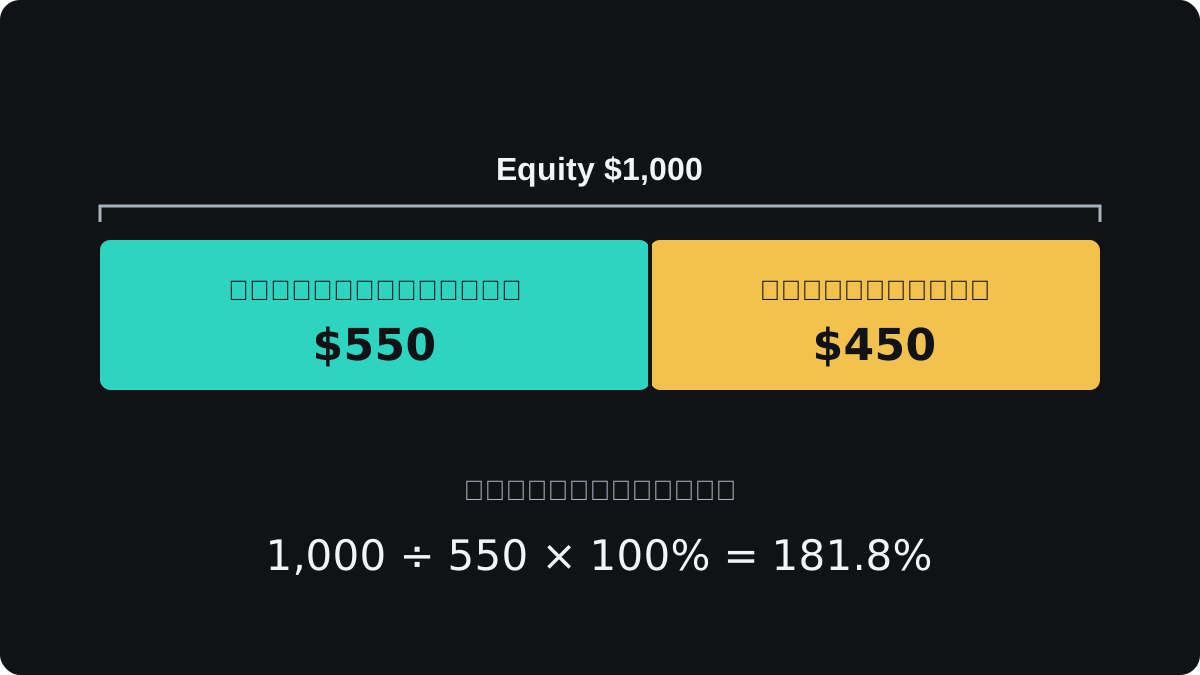
ทันทีหลังเปิดออเดอร์ข้างต้น ก่อนราคาขยับ Balance และ Equity เท่ากันที่ $1,000 มาร์จิ้นคือ $550 ฟรีมาร์จิ้นจึงเป็น $1,000 ลบ $550 = $450
ระดับมาร์จิ้นคืออะไร?
ระดับมาร์จิ้น (margin level) บอกว่าออเดอร์ที่เปิดอยู่มีเงินรองรับดีแค่ไหน MetaTrader แสดงเป็นเปอร์เซ็นต์:
ระดับมาร์จิ้น = Equity ÷ มาร์จิ้น × 100%
ในตัวอย่าง $1,000 ÷ $550 × 100% = 181.8% ยิ่งตัวเลขสูง คุณยิ่งมีที่ว่างมาก หากไม่มีออเดอร์เปิดอยู่ ก็ไม่มีระดับมาร์จิ้นให้แสดง
Margin Call และ Stop Out
โบรกเกอร์ตั้งเกณฑ์สองระดับไว้บนระดับมาร์จิ้น แต่ละโบรกเกอร์และประเภทบัญชีมีตัวเลขของตัวเอง ระบุไว้ในเงื่อนไขของบัญชี บทเรียนนี้ใช้ 100% และ 50% เป็นตัวอย่างเท่านั้น
- Margin Call คือระดับเตือน บัญชีจะถูกแจ้งเตือนและโบรกเกอร์อาจติดต่อคุณ ที่ 100% ฟรีมาร์จิ้นลดลงเหลือศูนย์ จึงไม่เหลือเงินสำหรับออเดอร์ใหม่
- Stop Out คือจุดที่ระบบของโบรกเกอร์ลงมือ คำสั่งที่รอทำงาน (pending order) จะถูกลบ และสถานะที่เปิดอยู่จะถูกปิด ปกติเริ่มจากสถานะที่ขาดทุนมากที่สุด จนกว่าระดับมาร์จิ้นจะกลับขึ้นมา
ทีนี้ลองตามตัวอย่างเมื่อ EUR/USD ร่วงลง สถานะ 0.50 ล็อตเสีย $5 ต่อ pip เพื่อให้คำนวณง่าย มาร์จิ้นถูกตรึงไว้ที่ $550 บนแพลตฟอร์มจริง มาร์จิ้นจะขยับเล็กน้อยตามราคายูโร
| EUR/USD | pip ที่สวนทางคุณ | ขาดทุนลอยตัว | Equity | ระดับมาร์จิ้น |
|---|---|---|---|---|
| 1.10000 | 0 | $0 | $1,000 | 181.8% |
| 1.09500 | 50 | $250 | $750 | 136.4% |
| 1.09100 | 90 | $450 | $550 | 100% (Margin Call) |
| 1.08550 | 145 | $725 | $275 | 50% (Stop Out) |
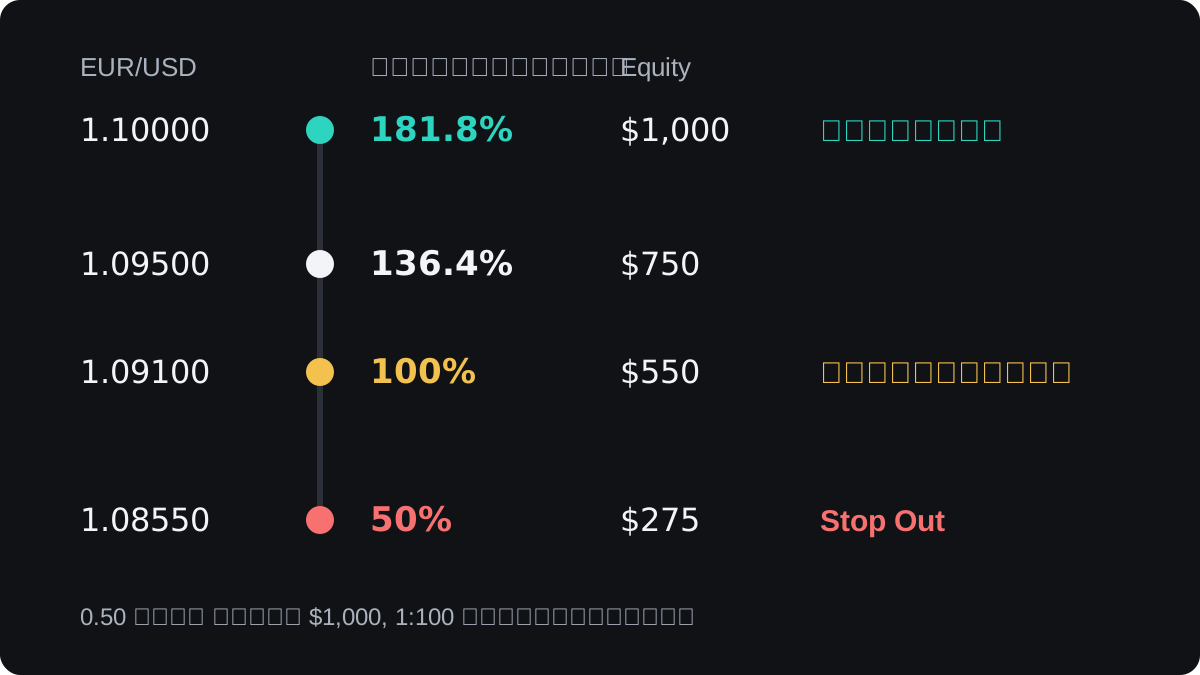
การร่วง 145 pip หรือราว 1.3% ก็พอจะปิดออเดอร์นี้ เทรดเดอร์ขาดทุน $725 และเหลือเงิน $275
ราคาขยับได้ไกลแค่ไหนก่อนโดน Stop Out?
คุณคำนวณเรื่องนี้ได้ก่อนเทรด โดยใช้ มูลค่า pip ของสถานะ:
จำนวน pip ก่อน Stop Out = (Equity ลบ ระดับ Stop Out × มาร์จิ้น) ÷ มูลค่า pip
สำหรับตัวอย่าง: ($1,000 ลบ 50% × $550) ÷ $5 = $725 ÷ $5 = 145 pip ตรงกับตาราง
ลองคำนวณแบบเดียวกันกับ 0.10 ล็อต มาร์จิ้นเป็น $110 และหนึ่ง pip มีมูลค่า $1 ดังนั้น ($1,000 ลบ $55) ÷ $1 = 945 pip สถานะที่เล็กกว่าให้ที่หายใจเพิ่มขึ้นมหาศาล
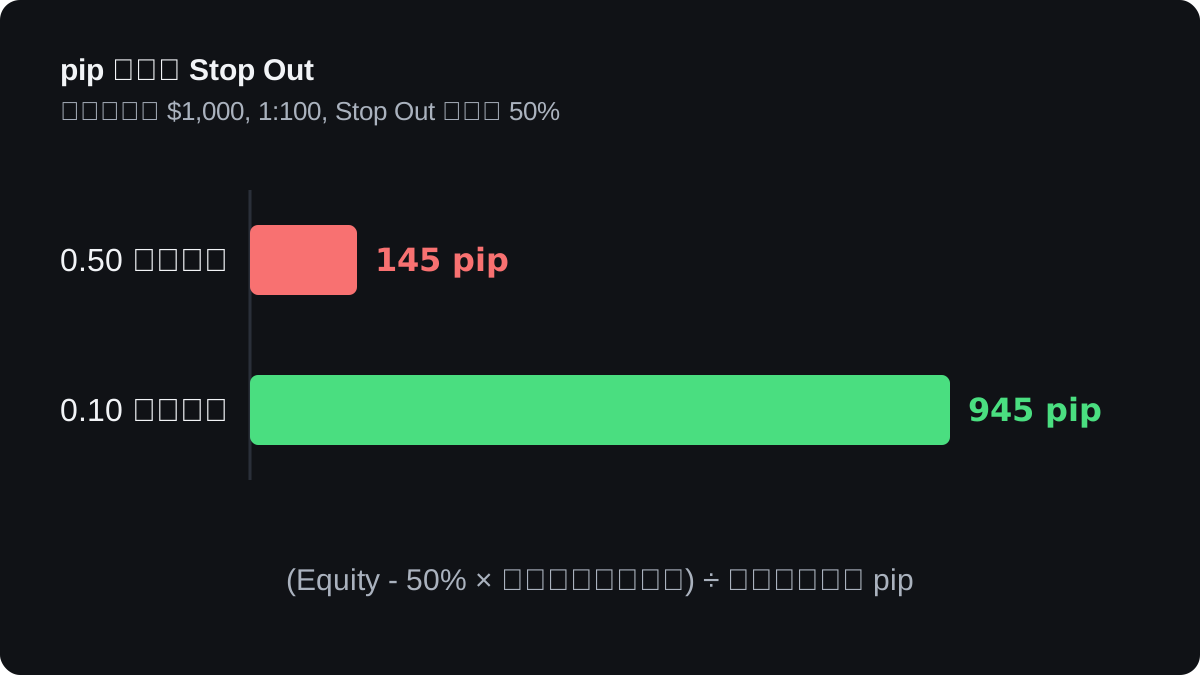
นี่ก็เป็นเหตุผลที่เลเวอเรจสูงเพียงอย่างเดียวไม่ใช่อันตราย ที่ 1:500 ออเดอร์ 0.50 ล็อตจะกันมาร์จิ้นเพียง $110 และ Stop Out จะอยู่ห่างออกไป 189 pip แทนที่จะเป็น 145
อันตรายคือการเปิดสถานะที่ใหญ่ขึ้นเพราะมาร์จิ้นดูถูก
วิธีอยู่ให้ห่างจาก Stop Out
- กำหนดขนาดแต่ละออเดอร์จาก Stop Loss ตาม บทเรียนเรื่องขนาดล็อต เพื่อให้ Stop ตามปกติเสียเงินเพียงส่วนเล็กของบัญชี
- ดูระดับมาร์จิ้น ไม่ใช่แค่กำไร ออเดอร์หลายตัวที่เปิดอยู่จะรวมมาร์จิ้นเข้าด้วยกัน
- เตรียมรับมือกับ สเปรดที่กว้างขึ้น ช่วงโรลโอเวอร์และช่วงข่าว สเปรดที่กว้างขึ้นทำให้ Equity ลดลงในออเดอร์ที่เปิดอยู่ทั้งหมดพร้อมกัน
- ตรวจดูระดับ Margin Call และ Stop Out ของโบรกเกอร์ไว้ก่อนที่จะต้องใช้
- หลีกเลี่ยงการเพิ่มออเดอร์ในฝั่งที่ขาดทุนเพื่อถัวเฉลี่ยราคา เพราะใช้มาร์จิ้นมากขึ้นขณะที่ Equity ลดลง
เครื่องคำนวณมาร์จิ้น แสดงว่าออเดอร์จะกันมาร์จิ้นไว้เท่าไร สำหรับทุกคู่เงิน ทุกขนาด และทุกเลเวอเรจ ก่อนคุณส่งคำสั่ง
คำถามที่พบบ่อย
ระดับมาร์จิ้นเท่าไรจึงถือว่าดี?
ไม่มีเป้าหมายอย่างเป็นทางการ ยิ่งสูง ออเดอร์ของคุณยิ่งมีที่ว่างมาก ส่วนระดับที่อยู่เหนือ Margin Call ของโบรกเกอร์เพียงนิดเดียวแทบไม่เหลือที่ว่างเลย
เกิดอะไรขึ้นเมื่อโดน Stop Out?
ระบบของโบรกเกอร์จะลบคำสั่งที่รอทำงาน และปิดสถานะที่เปิดอยู่ที่ราคาตลาด ปกติเริ่มจากตัวที่ขาดทุนมากที่สุด จนกว่าระดับมาร์จิ้นจะกลับขึ้นเหนือระดับ Stop Out จากนั้นการขาดทุนจะกลายเป็นส่วนหนึ่งของ Balance
มาร์จิ้นเป็นค่าธรรมเนียมไหม?
ไม่ใช่ มาร์จิ้นคือเงินประกันที่ถูกกันไว้ระหว่างที่ออเดอร์เปิดอยู่ และคืนให้เมื่อปิดออเดอร์ ต้นทุนการเทรดคือสเปรด ค่าคอมมิชชั่น และสวอป
Stop Loss ป้องกัน Stop Out ได้ไหม?
โดยทั่วไปได้ ถ้าตั้ง Stop อย่างสมเหตุสมผลและกำหนดขนาดสถานะจาก Stop นั้น แต่ในตลาดที่เร็ว หรือเมื่อราคากระโดดข้ามสุดสัปดาห์ ราคาอาจข้ามทั้งสองจุดไปได้ Stop จึงเป็นแผน ไม่ใช่การรับประกัน
เรียนต่อ
 บทที่ 6What is margin trading?Margin trading means opening a position worth more than the money in your account. The broker sets aside part of your balance, the margin, as a deposit while the trade is open. Profit and loss are counted on the full position size, so small price moves change your balance much faster than the margin suggests.
 บทที่ 6What is account balance in forex?Your account balance is the money in your trading account from deposits, withdrawals and closed trades, after booked costs such as commission and swap. It does not include open positions. While a trade is open the balance stays the same, and the floating profit or loss shows up in your equity instead.
 บทที่ 6What is floating (unrealized) profit and loss?Floating profit and loss is the result your open trades would show if you closed them at the current price. It changes with every tick and moves your equity, while your balance stays the same. It becomes realized, and is added to or taken from your balance, only when the trade closes.
 บทที่ 6What is used margin?Used margin is the total amount your broker sets aside to keep all your open positions open. Each position's margin is its notional value divided by your leverage, and used margin adds them up. It is not a fee: the money returns to free margin when you close the trades.
 บทที่ 6What is equity in a trading account?Equity is your account balance plus or minus the floating profit or loss of your open trades. It shows what the account would be worth if you closed everything at current prices. With no trades open, equity equals balance. Brokers use it to work out free margin, margin level and stop outs.
 บทที่ 6What is free margin?Free margin is the money in your trading account that is not locked up as margin for open trades. It equals equity minus used margin. You need free margin to open new positions, and it falls as open trades lose and rises as they gain. At zero, your margin level is 100%.
 บทที่ 6What is margin level?Margin level is your equity divided by your used margin, multiplied by 100 and shown as a percentage. It tells you how much cushion your open trades have. At 100%, equity equals used margin and free margin is zero. Brokers set their margin call and stop out levels on this number, and the levels differ between brokers.
 บทที่ 6What is a margin call?A margin call is your broker's warning that your margin level, equity divided by used margin, has fallen to a set threshold such as 100%. You usually cannot open new trades from that point. The call closes nothing by itself. If losses continue, the broker's stop out level is where positions start to be closed for you.
 บทที่ 6What is a stop out level?The stop out level is the margin level at which your broker starts closing your open positions automatically, often beginning with the largest loss. If your stop out level is 50%, closing begins when equity falls to half your used margin. It is meant to stop your account sinking further, though a price gap can still push it below zero.
 บทที่ 6Margin call example: margin call at 100% with no separate stop out.When a broker sets the margin call and the stop out both at 100%, the warning and the forced close happen at the same moment. In this example, a $1,000 account buys 0.50 lot of EUR/USD with $550 of margin at 1:100, and the trade is closed after a 90 pip fall, a $450 loss.
 บทที่ 6Margin call and stop out example: 100% and 50%.In this example a $2,000 account buys 1 lot of EUR/USD at 1.10000 with $1,100 of used margin. The margin call at 100% arrives when equity falls to $1,100, 90 pips lower at 1.09100. The stop out at 50% closes the trade when equity reaches $550, at 1.08550, a loss of $1,450.
 บทที่ 6What happens if you trade forex with $100?With $100 and 1:100 leverage, 0.01 lot of EUR/USD at 1.10000 uses $11 of margin and can move about 890 pips against you before a 100% margin call. At 0.05 lot the margin call comes after 90 pips, and 0.10 lot cannot be opened at all. Trade size decides how much room you have.
 บทที่ 6Why margin call and stop out levels differ between brokers.Margin call and stop out levels are set by each broker, often per account type, within any rules from the regulator that licenses the account. In this lesson's example, one trade is closed after 90 pips at one broker and after 178 pips at another, so look up your own levels before you trade.
 บทที่ 6เลเวอเรจในฟอเร็กซ์คืออะไร?เลเวอเรจทำให้คุณคุมสถานะที่ใหญ่กว่าเงินฝากได้มาก ที่ 1:100 มาร์จิ้นทุก $1 ถือสกุลเงินมูลค่า $100 สถานะมูลค่า $110,000 จึงใช้มาร์จิ้น $1,100 เลเวอเรจกำหนดว่ามาร์จิ้นถูกกันไว้เท่าไร ไม่ได้กำหนดว่า pip มีมูลค่าเท่าไร ความเสี่ยงจริงมาจากขนาดสถานะที่คุณเลือก
 บทที่ 6Margin cheat sheet.Balance is the cash from deposits, withdrawals and closed trades. Equity is balance plus the floating profit or loss on open trades. Used margin is the deposit your open trades hold, and free margin is equity minus used margin. Margin level is equity divided by used margin, times 100. A margin call warns; a stop out closes trades.
 บทที่ 6How can you avoid a margin call?Margin level is your equity divided by your used margin, and a margin call comes when it falls to your broker's threshold. To stay clear, keep positions small compared with your equity, set stop losses that close losing trades long before that point, and leave plenty of free margin unused.

