เลเวอเรจในฟอเร็กซ์คืออะไร?
เลเวอเรจทำให้คุณคุมสถานะที่ใหญ่กว่าเงินฝากได้มาก ที่ 1:100 มาร์จิ้นทุก $1 ถือสกุลเงินมูลค่า $100 สถานะมูลค่า $110,000 จึงใช้มาร์จิ้น $1,100 เลเวอเรจกำหนดว่ามาร์จิ้นถูกกันไว้เท่าไร ไม่ได้กำหนดว่า pip มีมูลค่าเท่าไร ความเสี่ยงจริงมาจากขนาดสถานะที่คุณเลือก

ถ้าไม่มีเลเวอเรจ EUR/USD หนึ่งล็อตมาตรฐานจะต้องใช้เงินในบัญชีมากกว่า $100,000 เมื่อมีเลเวอเรจ เงินไม่กี่ร้อยดอลลาร์ก็เปิดออเดอร์เดียวกันได้ นั่นคือเสน่ห์ทั้งหมด และก็คืออันตรายทั้งหมดด้วย
เลเวอเรจทำงานอย่างไร?
เลเวอเรจเขียนเป็นอัตราส่วน เช่น 1:100 หมายความว่าเงิน $1 ที่คุณวางเป็นมาร์จิ้นคุมสถานะได้ $100 โบรกเกอร์ถือมาร์จิ้นนั้นไว้เป็นเงินประกันระหว่างที่ออเดอร์เปิดอยู่
ลองดู EUR/USD 0.10 ล็อต ที่ 1.10000 เพื่อการอธิบาย สถานะนี้มีมูลค่า 10,000 × 1.10000 = $11,000 ที่ 1:100 คุณต้องใช้มาร์จิ้น $11,000 ÷ 100 = $110 เพื่อเปิดออเดอร์
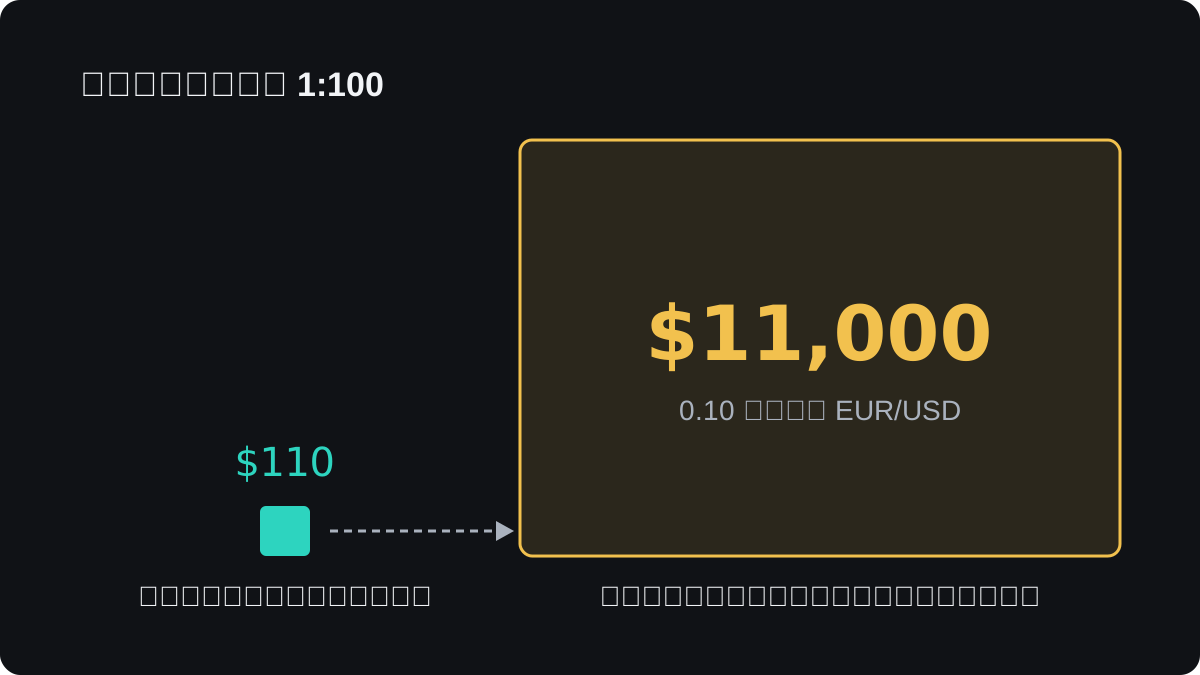
คุณไม่ได้รับเงินอีก $10,900 นั้นจริง การเทรดฟอเร็กซ์รายย่อยชำระกันเป็นเงินสด มีเพียงกำไรหรือขาดทุนเท่านั้นที่เข้าหรือออกจากบัญชีของคุณ
เลเวอเรจ มาร์จิ้น และขนาดสถานะ
สามตัวเลขนี้ผูกกันด้วยสูตรเดียว:
มาร์จิ้น = มูลค่าสถานะ ÷ เลเวอเรจ
อัตรามาร์จิ้นจึงเท่ากับ 100 ÷ เลเวอเรจ คิดเป็นเปอร์เซ็นต์ ที่ 1:100 โบรกเกอร์ขอ 1% ของสถานะ และที่ 1:500 ขอ 0.2%
นี่คือมาร์จิ้นที่ EUR/USD หนึ่งล็อตมาตรฐานที่ 1.10000 ซึ่งมีมูลค่า $110,000 ต้องใช้ในแต่ละระดับเลเวอเรจ:
| เลเวอเรจ | อัตรามาร์จิ้น | มาร์จิ้นสำหรับ 1.00 ล็อต |
|---|---|---|
| 1:30 | 3.33% | $3,666.67 |
| 1:100 | 1% | $1,100 |
| 1:500 | 0.2% | $220 |
| 1:2000 | 0.05% | $55 |
ค่าที่ตั้งในบัญชีไม่ได้เป็นเลเวอเรจที่คุณได้จริงเสมอไป โบรกเกอร์หลายแห่งใช้เลเวอเรจต่ำลงกับสถานะขนาดใหญ่มาก กับตราสารบางตัว หรือในช่วงใกล้ข่าวสำคัญและช่วงสุดสัปดาห์
เครื่องคำนวณเลเวอเรจ คำนวณตัวเลขเหล่านี้ได้ทุกคู่เงิน ทุกขนาด และทุกสกุลเงินบัญชี ส่วนมาร์จิ้นคืออะไร และจะเกิดอะไรขึ้นเมื่อมาร์จิ้นไม่พอ อยู่ในบทเรียน มาร์จิ้นและ Stop Out
เลเวอเรจไม่ได้เปลี่ยนมูลค่าของ pip
นี่คือส่วนที่มือใหม่ส่วนใหญ่พลาด EUR/USD หนึ่งล็อตขยับ $10 ต่อ pip ไม่ว่าเลเวอเรจของคุณจะเป็น 1:30 หรือ 1:2000 เลเวอเรจเปลี่ยนแค่ว่ามาร์จิ้นถูกกันไว้เท่าไรระหว่างที่ออเดอร์เปิดอยู่
กำไรและขาดทุนของคุณมาจาก ขนาดล็อต เลเวอเรจที่สูงขึ้นทำให้คุณเปิดล็อตที่ใหญ่ขึ้นได้ด้วยเงินเท่าเดิม และตรงนั้นคือจุดที่อันตรายเริ่มต้น
เลเวอเรจที่ใช้จริง: ตัวเลขที่สำคัญ
เลเวอเรจที่ใช้จริง (effective leverage) เปรียบเทียบสิ่งที่คุณเปิดอยู่กับสิ่งที่คุณมี:
เลเวอเรจที่ใช้จริง = มูลค่าสถานะทั้งหมด ÷ Equity ของบัญชี
สมมติคุณมี $1,000 และซื้อ EUR/USD 0.50 ล็อตที่ 1.10000 สถานะมีมูลค่า $55,000 เลเวอเรจที่ใช้จริงของคุณจึงเป็น 55,000 ÷ 1,000 = 55:1 ไม่ว่าค่าที่ตั้งในบัญชีจะเป็นเท่าไร
ที่ 55:1 ราคาขยับ 1% ทำให้คุณเสีย 55% ของบัญชี การขยับ 1% จาก 1.10000 คือ 110 pip และ 110 pip × $5 ต่อ pip = $550
การขยับแบบนี้ไม่ได้หายาก เมื่อวันที่ 29 ตุลาคม 2026 ถึงเวลา 16:35 UTC EUR/USD ซื้อขายในช่วง 1.11152 ถึง 1.11710 ของวันนั้นไปแล้ว คิดเป็นกรอบราว 0.5%
กราฟแสดงบัญชี $1,000 เดียวกัน ที่เจอราคาวิ่งสวน 50 pip เท่ากัน ในขนาดสถานะสี่ขนาด
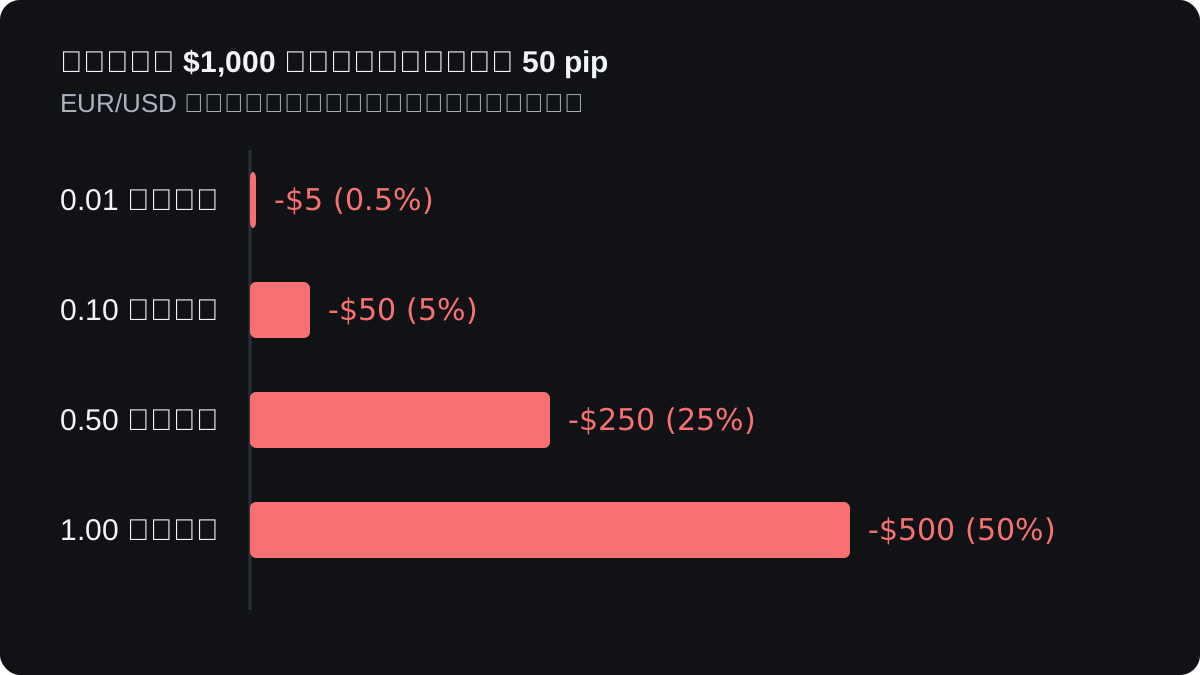
สังเกตแท่งสุดท้าย ที่ 1:100 สถานะ 1.00 ล็อตต้องใช้มาร์จิ้น $1,100 ซึ่งมากกว่าเงินในบัญชี มีเพียงค่าเลเวอเรจที่สูงกว่านี้มากเท่านั้นที่ทำให้เปิดออเดอร์นั้นได้
ทำไมเลเวอเรจจึงเสี่ยง?
เลเวอเรจขยายการขาดทุนในสัดส่วนเดียวกับที่ขยายกำไรทุกประการ สถานะที่ใหญ่เกินบัญชีอาจเสียเงินก้อนใหญ่ได้จากการขยับของราคาตามปกติ
ในตลาดที่เคลื่อนไหวเร็ว Stop Loss ยังอาจถูกจับคู่ที่ราคาแย่กว่าระดับที่ตั้งไว้ ซึ่งเรียกว่า สลิปเพจ (slippage) ยิ่งสถานะใหญ่ สลิปเพจแต่ละ pip ที่เพิ่มขึ้นก็ยิ่งมีต้นทุนสูง
หน่วยงานกำกับดูแลบางแห่งจำกัดเลเวอเรจสำหรับลูกค้ารายย่อยด้วยเหตุนี้ ตัวอย่างเช่น ในสหภาพยุโรป เลเวอเรจรายย่อยบนคู่เงินหลักถูกจำกัดไว้ที่ 1:30 และในสหรัฐอเมริกาที่ 1:50
โบรกเกอร์หลายแห่งนอกภูมิภาคเหล่านั้นเสนอค่าที่สูงกว่ามาก ให้ถามเรื่องการป้องกันยอดติดลบ (negative balance protection) ด้วย หากมีการป้องกันนี้ การขาดทุนของคุณจะไม่เกินเงินที่อยู่ในบัญชี
วิธีเลือกค่าเลเวอเรจ
มองเลเวอเรจเป็นเพดาน ไม่ใช่เป้าหมาย กำหนดขนาดแต่ละออเดอร์จากความเสี่ยงก่อน แล้วตรวจว่าหลังกันมาร์จิ้นแล้วยังเหลือฟรีมาร์จิ้นอีกมาก
ลองดูด้วยตัวเลข บัญชี $1,000 เสี่ยง 1% หรือ $10 โดยตั้ง Stop 25 pip บน EUR/USD ขนาดจึงเป็น $10 ÷ (25 × $10) = 0.04 ล็อต
ที่ 1.10000 ออเดอร์นี้กันมาร์จิ้น $44 ที่ 1:100 หรือ $8.80 ที่ 1:500 ทั้งสองกรณี Stop เสียเงินเท่ากันพอดีที่ $10 เลเวอเรจเปลี่ยนมาร์จิ้น ไม่ได้เปลี่ยนความเสี่ยง
เลเวอเรจที่สูงขึ้นกันมาร์จิ้นน้อยลงสำหรับออเดอร์เดียวกัน ทำให้มีที่ว่างรับช่วงขาดทุนติดกันได้มากขึ้น ปัญหาเริ่มเมื่อคุณใช้ที่ว่างนั้นเปิดสถานะที่ใหญ่ขึ้น
นิสัยที่ใช้ได้จริง: รักษาเลเวอเรจที่ใช้จริงให้ต่ำ และรู้ระดับ Stop Out ของคุณก่อนเปิดออเดอร์ใดๆ เครื่องคำนวณมาร์จิ้น แสดงว่าออเดอร์จะกันมาร์จิ้นไว้เท่าไรก่อนคุณส่งคำสั่ง
คำถามที่พบบ่อย
เลเวอเรจ 1:500 หมายความว่าอะไร?
มาร์จิ้นทุก $1 คุมสถานะได้ $500 EUR/USD หนึ่งล็อตมาตรฐานที่ 1.10000 ซึ่งมีมูลค่า $110,000 จะใช้มาร์จิ้น $220
เลเวอเรจสูงเสี่ยงกว่าหรือไม่?
ตัวมันเองไม่ได้เสี่ยงกว่า เพราะมูลค่า pip ขึ้นกับขนาดล็อต ไม่ใช่เลเวอเรจ ความเสี่ยงจะสูงขึ้นเมื่อที่ว่างที่เพิ่มมาล่อให้คุณเปิดสถานะใหญ่เกินกว่าที่บัญชีรับไหว
มือใหม่ควรใช้เลเวอเรจเท่าไร?
ไม่มีค่าที่ถูกต้องเพียงค่าเดียว สิ่งที่ปกป้องคุณคือเลเวอเรจที่ใช้จริงที่ต่ำ หมายถึงสถานะที่เล็กเมื่อเทียบกับ Equity ของคุณ และตั้ง Stop Loss ทุกครั้งที่เทรด
ขาดทุนเกินเงินที่ฝากได้ไหม?
ขึ้นอยู่กับโบรกเกอร์และประเทศที่คุณอยู่ หากมีการป้องกันยอดติดลบ บัญชีของคุณจะไม่ต่ำกว่าศูนย์ หากไม่มี ราคาที่กระโดดแรงอาจทำให้ยอดติดลบ ซึ่งคุณต้องชดใช้
เรียนต่อ
 บทที่ 6What is margin trading?Margin trading means opening a position worth more than the money in your account. The broker sets aside part of your balance, the margin, as a deposit while the trade is open. Profit and loss are counted on the full position size, so small price moves change your balance much faster than the margin suggests.
 บทที่ 6What is account balance in forex?Your account balance is the money in your trading account from deposits, withdrawals and closed trades, after booked costs such as commission and swap. It does not include open positions. While a trade is open the balance stays the same, and the floating profit or loss shows up in your equity instead.
 บทที่ 6What is floating (unrealized) profit and loss?Floating profit and loss is the result your open trades would show if you closed them at the current price. It changes with every tick and moves your equity, while your balance stays the same. It becomes realized, and is added to or taken from your balance, only when the trade closes.
 บทที่ 6มาร์จิ้น ระดับมาร์จิ้น และ Stop Out ในฟอเร็กซ์คืออะไร?มาร์จิ้นคือส่วนของเงินที่โบรกเกอร์กันไว้เป็นเงินประกันระหว่างที่ออเดอร์ซึ่งใช้เลเวอเรจเปิดอยู่ ระดับมาร์จิ้นคือ Equity หารด้วยมาร์จิ้นที่ใช้ คูณ 100% เมื่อระดับนี้ลดลงถึงระดับ Margin Call ของโบรกเกอร์ บัญชีจะถูกแจ้งเตือน และที่ระดับ Stop Out โบรกเกอร์จะเริ่มปิดสถานะของคุณโดยอัตโนมัติ
 บทที่ 6What is used margin?Used margin is the total amount your broker sets aside to keep all your open positions open. Each position's margin is its notional value divided by your leverage, and used margin adds them up. It is not a fee: the money returns to free margin when you close the trades.
 บทที่ 6What is equity in a trading account?Equity is your account balance plus or minus the floating profit or loss of your open trades. It shows what the account would be worth if you closed everything at current prices. With no trades open, equity equals balance. Brokers use it to work out free margin, margin level and stop outs.
 บทที่ 6What is free margin?Free margin is the money in your trading account that is not locked up as margin for open trades. It equals equity minus used margin. You need free margin to open new positions, and it falls as open trades lose and rises as they gain. At zero, your margin level is 100%.
 บทที่ 6What is margin level?Margin level is your equity divided by your used margin, multiplied by 100 and shown as a percentage. It tells you how much cushion your open trades have. At 100%, equity equals used margin and free margin is zero. Brokers set their margin call and stop out levels on this number, and the levels differ between brokers.
 บทที่ 6What is a margin call?A margin call is your broker's warning that your margin level, equity divided by used margin, has fallen to a set threshold such as 100%. You usually cannot open new trades from that point. The call closes nothing by itself. If losses continue, the broker's stop out level is where positions start to be closed for you.
 บทที่ 6What is a stop out level?The stop out level is the margin level at which your broker starts closing your open positions automatically, often beginning with the largest loss. If your stop out level is 50%, closing begins when equity falls to half your used margin. It is meant to stop your account sinking further, though a price gap can still push it below zero.
 บทที่ 6Margin call example: margin call at 100% with no separate stop out.When a broker sets the margin call and the stop out both at 100%, the warning and the forced close happen at the same moment. In this example, a $1,000 account buys 0.50 lot of EUR/USD with $550 of margin at 1:100, and the trade is closed after a 90 pip fall, a $450 loss.
 บทที่ 6Margin call and stop out example: 100% and 50%.In this example a $2,000 account buys 1 lot of EUR/USD at 1.10000 with $1,100 of used margin. The margin call at 100% arrives when equity falls to $1,100, 90 pips lower at 1.09100. The stop out at 50% closes the trade when equity reaches $550, at 1.08550, a loss of $1,450.
 บทที่ 6What happens if you trade forex with $100?With $100 and 1:100 leverage, 0.01 lot of EUR/USD at 1.10000 uses $11 of margin and can move about 890 pips against you before a 100% margin call. At 0.05 lot the margin call comes after 90 pips, and 0.10 lot cannot be opened at all. Trade size decides how much room you have.
 บทที่ 6Why margin call and stop out levels differ between brokers.Margin call and stop out levels are set by each broker, often per account type, within any rules from the regulator that licenses the account. In this lesson's example, one trade is closed after 90 pips at one broker and after 178 pips at another, so look up your own levels before you trade.
 บทที่ 6Margin cheat sheet.Balance is the cash from deposits, withdrawals and closed trades. Equity is balance plus the floating profit or loss on open trades. Used margin is the deposit your open trades hold, and free margin is equity minus used margin. Margin level is equity divided by used margin, times 100. A margin call warns; a stop out closes trades.
 บทที่ 6How can you avoid a margin call?Margin level is your equity divided by your used margin, and a margin call comes when it falls to your broker's threshold. To stay clear, keep positions small compared with your equity, set stop losses that close losing trades long before that point, and leave plenty of free margin unused.

