When do you buy or sell a currency pair?
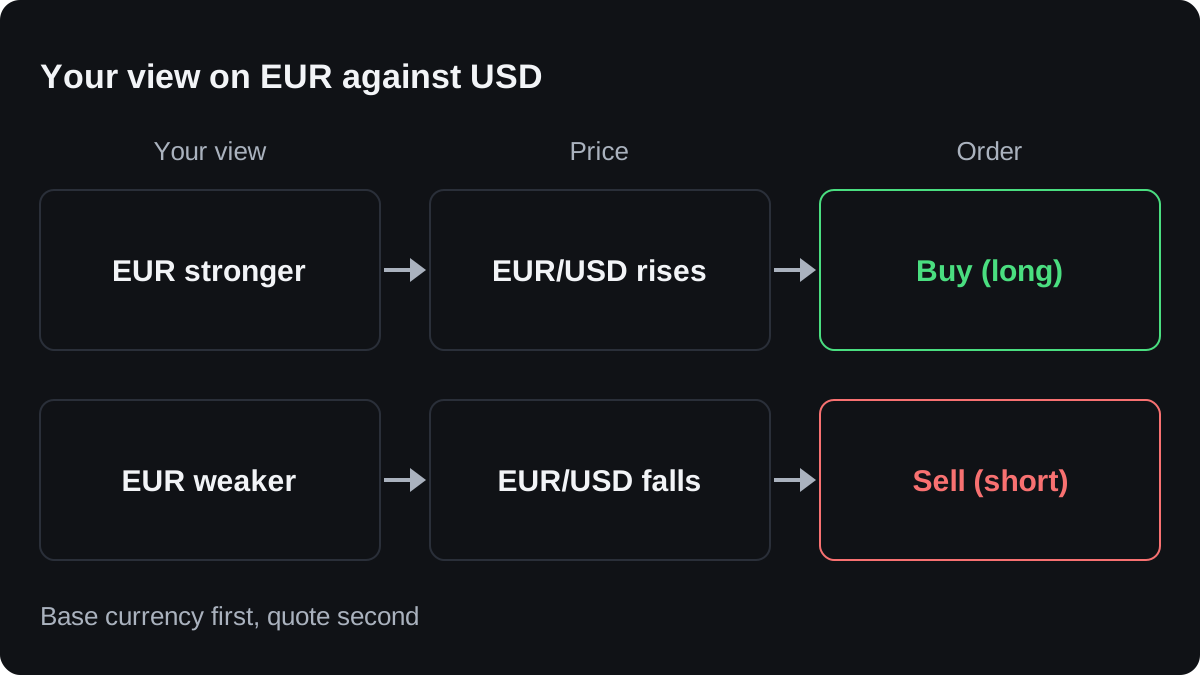
You buy a currency pair when you expect the first currency, the base, to strengthen against the second, and you sell when you expect it to weaken. If your view is about one currency, find which side of the pair it sits on: a weaker quote currency pushes the pair up, so you buy.
ខ្លឹមសារនេះមានតែជាភាសាអង់គ្លេសសិន។
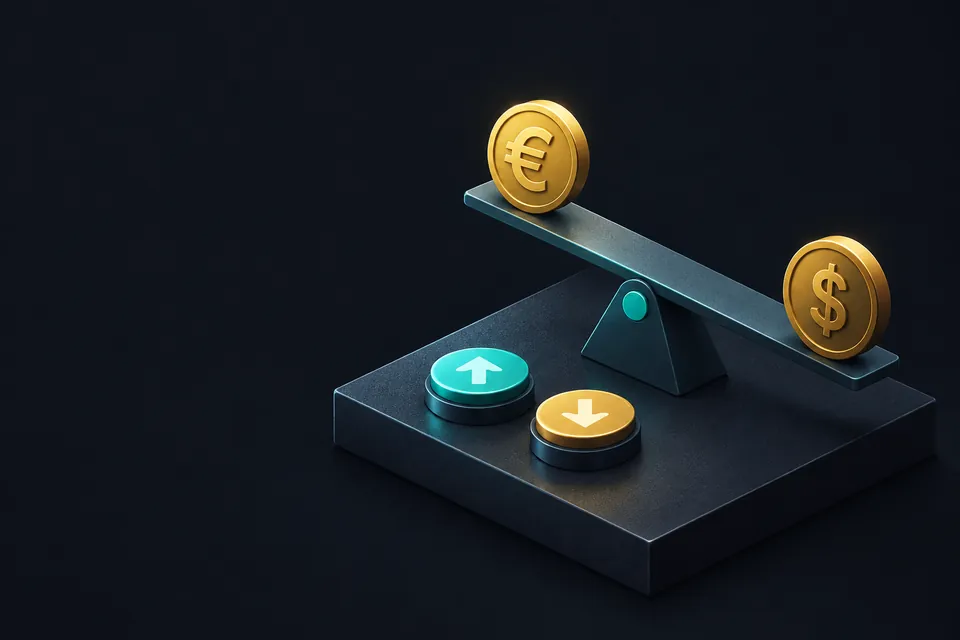
Every trade starts with one button: buy or sell. You buy a currency pair when you expect the first currency to gain value against the second, and you sell when you expect it to lose value.
The harder part comes when your opinion is about a single currency, such as "the yen will weaken". You then have to pick a pair and work out which button matches your view.
What does a buy or a sell say about your view?
Take EUR/USD at an illustrative price of 1.10000. That price means one euro costs 1.10000 US dollars. If you think a euro will soon cost more dollars, you buy, and if you think it will cost fewer, you sell.
The euro here is the base currency, the first one in the pair, and the dollar is the quote currency. A rising price always means one unit of the base buys more of the quote.
That gives one rule for every pair:
- Expect the base to strengthen against the quote: buy, also called going long.
- Expect the base to weaken against the quote: sell, also called going short.
Selling first is normal in forex. You do not need to own euros to sell EUR/USD, because a retail trade is a contract with your broker. You open with a sell and close later with a buy.
The lesson on how a forex trade makes or loses money shows how the result of each kind of trade is calculated.
Why can a pair move because of either currency?
A pair's price compares two currencies, so it changes when either one changes. EUR/USD can rise because the euro gains in general, because the dollar loses, or both at once.
A buy on EUR/USD is therefore a bet on the euro relative to the dollar. Being right about the euro on its own is not enough.
Here is an illustrative day. The euro gains 0.3% against the yen, and the dollar gains 0.8% against the yen.
The euro had a good day, yet EUR/USD falls. The pair moves by the ratio of the two changes: 1.003 ÷ 1.008 = 0.995, a fall of about 0.5%.
Before any trade, ask which of the two currencies you expect to do better from here. The lesson on pairing a strong currency with a weak one builds on this idea.
How do you turn a view on one currency into a trade?
Most opinions start with one currency. You might read that a central bank may cut rates and decide its currency looks weak. The pair you choose then decides which button you press.
Three steps turn that opinion into an order:
- Find where your currency sits in the pair, on the left or on the right.
- On the left, it is the base: buy if you expect it to strengthen, sell if you expect it to weaken.
- On the right, it is the quote and the logic flips: a weaker quote currency lifts the pair, so you buy, and a stronger one pushes it down, so you sell.
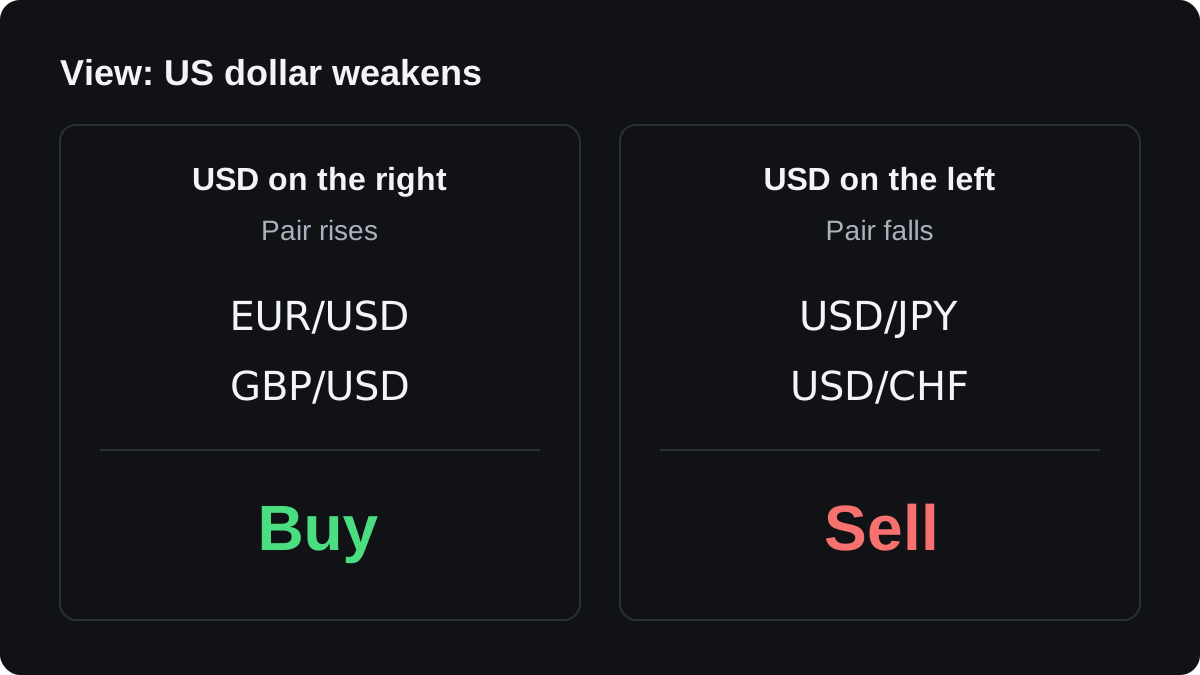
Here is one view, that the US dollar will weaken, applied to four major pairs:
| Pair | Where USD sits | Expected move | Order |
|---|---|---|---|
| EUR/USD | Right (quote) | Rises | Buy |
| GBP/USD | Right (quote) | Rises | Buy |
| USD/JPY | Left (base) | Falls | Sell |
| USD/CHF | Left (base) | Falls | Sell |
The same check works for any currency. If you expect the yen to weaken, USD/JPY and EUR/JPY should both rise, so you would buy either one.
Each pair also carries a view on its other currency. Buying EUR/USD and buying GBP/USD both bet against the dollar, yet one also bets on the euro and the other on the pound.
Worked example: one dollar view, two trades
Say you expect the dollar to weaken over the next few days. Both trades below express that view. The prices are illustrative, and the spread is left out to keep the arithmetic clear.
Both trades use 0.10 lot, which is 10,000 units of the base currency.
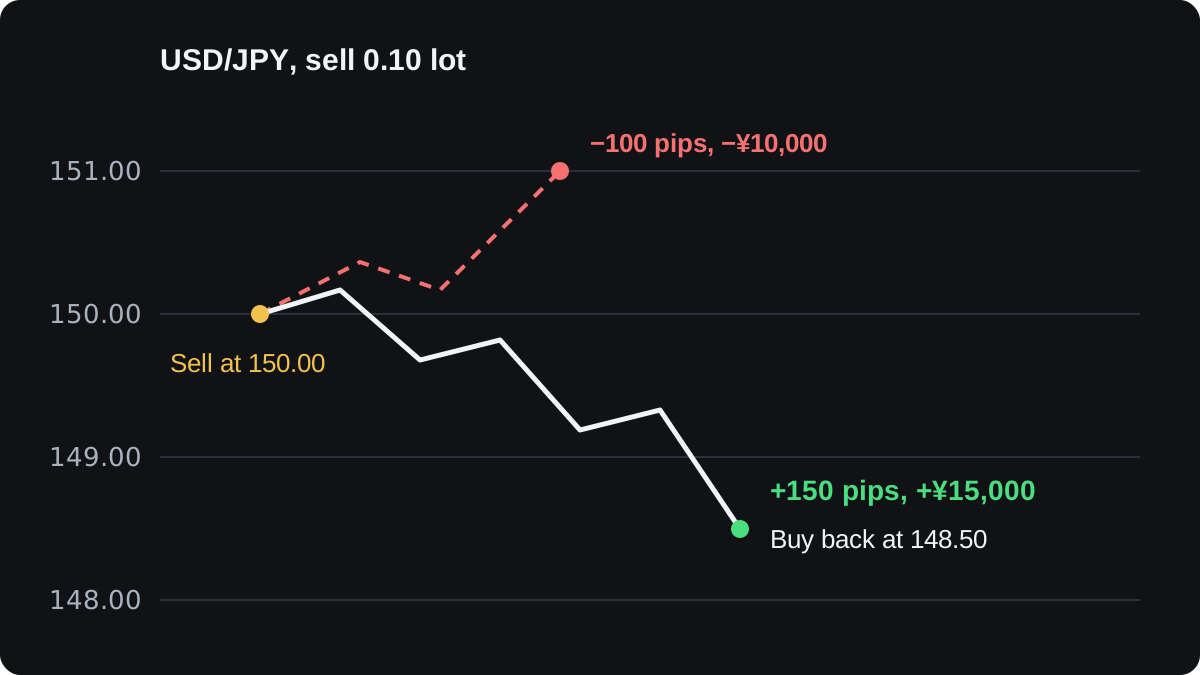
Trade A: sell USD/JPY
- You sell 0.10 lot of USD/JPY at 150.00, a position of 10,000 dollars.
- You buy it back at 148.50. The price fell by 150.00 − 148.50 = 1.50, in your favour.
- On yen pairs a pip, the standard price step, is 0.01, so 1.50 is 150 pips.
- One pip on 10,000 dollars is 10,000 × 0.01 = ¥100, so the gain is 150 × ¥100 = ¥15,000.
- In a US dollar account at 148.50, that is 15,000 ÷ 148.50 = $101.01.
If the dollar had risen instead and you closed at 151.00, the result would be 150.00 − 151.00 = −1.00, or −100 pips. That is −¥10,000, or 10,000 ÷ 151.00 = $66.23 lost.
Trade B: buy EUR/USD
- You buy 0.10 lot of EUR/USD at 1.10000, a position of 10,000 euros.
- You sell it at 1.10800. The price rose by 1.10800 − 1.10000 = 0.00800.
- On this pair a pip is 0.0001, so the move is 80 pips.
- One pip on 10,000 euros is 10,000 × 0.0001 = $1.00, so the gain is 80 × $1.00 = $80.00.
Both trades made money because the dollar fell in this example. The amounts differ because the yen and the euro had their own moves too.
Had the yen weakened faster than the dollar, USD/JPY would have risen and Trade A would have lost, even with your dollar view correct. You can rerun these sums with other prices in the profit and loss calculator.
What should you settle before you press buy or sell?
A buy or sell is a forecast, and forecasts are often wrong. The direction is only one of the choices a trade needs.
Traders form their expectation from price charts, from economic news and data, or from how other traders are positioned. The three types of analysis lesson compares these approaches.
None of them predicts short-term moves reliably. Evidence that any of them gives a lasting edge after costs is mixed, so treat every direction call as a guess you can test.
Before you open a trade, decide:
- the reason you expect this direction, in one sentence you could write down
- the price at which that reason is proven wrong, where a stop loss would close the trade
- a position size whose loss at that stop you can accept
- whether the move you expect is large enough to cover the spread and other costs
Price level alone is no reason to buy or sell. USD/JPY near 150 is not expensive and EUR/USD near 1.10 is not cheap, because each number only reflects the size of the currency units. A pair that has already fallen far can keep falling.
A demo account lets you practise choosing a direction and an exit with virtual money before any real money is at risk.
សំណួរ
Should I buy or sell if I think the yen will weaken?
In pairs where the yen is the quote currency, such as USD/JPY or EUR/JPY, a weaker yen pushes the price up, so the matching order is a buy. Check your view on the other currency in the pair as well.
Can I sell a currency pair I do not own?
Yes. A retail forex trade is a contract with your broker, so you can open with a sell and close it later with a buy.
Is it better to buy or sell?
Neither direction has a built-in advantage. A trade gains only if the price moves your way by more than its costs, and overnight swap can differ between a long and a short on the same pair.
What does going long or short mean?
Going long means you bought the pair and gain if it rises. Going short means you sold the pair and gain if it falls.
Does a falling price mean I should buy?
A fall on its own tells you little about what comes next, and a falling pair can keep falling. A trade in either direction needs a reason and a set price where you would exit if you are wrong.
បន្តរៀន
 ជំពូក 2How does a forex trade make or lose money?A forex trade makes money when the pair moves in your direction by more than the trade costs, and loses when it moves against you. A buy gains as the price rises and a sell gains as it falls. Profit is the price change times trade size, less commission and swap.
 ជំពូក 2Pip ក្នុង Forex ជាអ្វី?Pip គឺជាជំហានស្តង់ដារដែល trader ប្រើដើម្បីវាស់ចលនាតម្លៃ។ លើគូរូបិយប័ណ្ណភាគច្រើន វាស្មើនឹង 0.0001 ពោលគឺខ្ទង់ទសភាគទីបួន ហើយលើគូដែលដាក់តម្លៃជាយ៉េនជប៉ុន វាស្មើនឹង 0.01។ pipette គឺមួយភាគដប់នៃ pip។ លើ EUR/USD មួយ lot ស្តង់ដារ pip នីមួយៗមានតម្លៃ $10។
 ជំពូក 2Lot ក្នុង Forex ជាអ្វី?lot គឺជាឯកតាដែលគេប្រើដើម្បីកំណត់ទំហំនៃការជួញដូរ Forex។ មួយ lot ស្តង់ដារស្មើនឹង 100,000 ឯកតានៃរូបិយប័ណ្ណ Base, Mini lot ស្មើនឹង 10,000 និង Micro lot ស្មើនឹង 1,000។ លើ EUR/USD នោះធ្វើឲ្យ pip នីមួយៗមានតម្លៃ $10, $1 និង $0.10។ ឧបករណ៍ផ្សេងទៀត ដូចជាមាស ប្រើទំហំកិច្ចសន្យារៀងៗខ្លួន។
 ជំពូក 2Spread ក្នុង Forex ជាអ្វី?Spread គឺជាគម្លាតរវាងតម្លៃ Bid ដែលអ្នកអាចលក់ និងតម្លៃ Ask ដែលអ្នកអាចទិញ។ អ្នកបង់វាលើរាល់ order នៅពេលដែលអ្នកបើកវា។ លើ EUR/USD វាច្រើនតែមួយ ឬពីរ pip ឬតិចជាងនេះ ហើយវារីកធំនៅជុំវិញម៉ោងប្តូរថ្ងៃ ពេលបើកទីផ្សារប្រចាំសប្តាហ៍ និងពេលមានព័ត៌មានធំៗ។
 ជំពូក 2តម្លៃ Bid និង Ask ក្នុង Forex ជាអ្វី?ការដាក់តម្លៃ Forex នីមួយៗមានតម្លៃពីរ។ Bid គឺជាតម្លៃដែលអ្នកអាចលក់ ហើយ Ask គឺជាតម្លៃខ្ពស់ជាង ដែលអ្នកអាចទិញ។ គម្លាតរវាងវាទាំងពីរគឺ Spread។ អ្នកទិញនៅ Ask ហើយបិទនៅ Bid ដូច្នេះការជួញដូរថ្មីនីមួយៗចាប់ផ្តើមដោយខាតបន្តិច ស្មើនឹងទំហំ Spread។
 ជំពូក 2Forex terms you will hear every day.The everyday words of forex describe what a trade is doing and what it costs. Long means you bought, short means you sold. A pip is the standard price step, a lot is the trade size, the spread is the gap between bid and ask, and margin is the deposit your broker holds while a trade is open.
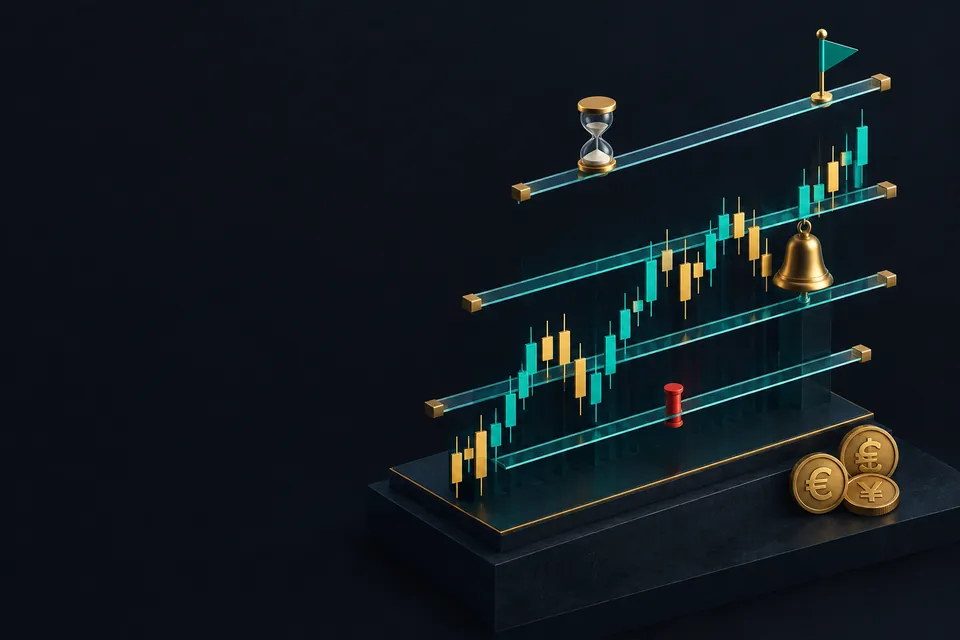 ជំពូក 2What types of orders can you place in forex?A market order buys or sells straight away at the current price. A pending order waits for a price you choose: a limit order waits for a better price, and a stop order joins a move once price breaks a level. Stop loss and take profit orders close an open trade at prices you set in advance.
 ជំពូក 2Forex order types cheat sheet.A market order fills now at the current price. A limit order waits for a better price: a buy limit below the market, a sell limit above it. A stop order waits for a worse price: a buy stop above, a sell stop below. Buy orders trigger on the ask, sell orders on the bid.
 ជំពូក 2What is a forex demo account, and how should you use it?A forex demo account is a practice account funded with virtual money. You trade on the broker's platform with live or near-live prices, so you can learn orders, stops and margin without risking your own cash. Set it up with the balance and leverage you would really use, and expect live fills and feelings to differ.
 ជំពូក 2Can you get rich trading forex?A few people make large sums trading forex, but the loss figures that EU and UK brokers must publish show that most retail CFD accounts at those brokers lose money. Getting rich would need a large starting balance and years of steady returns. Small accounts chasing big targets usually take risks large enough to wipe them out.
 ជំពូក 2សន្លឹកសង្ខេបមូលដ្ឋាន Forex៖ គូរូបិយប័ណ្ណ, pip, lot, Leverage និង Margin។សន្លឹកសង្ខេបនេះ ប្រមូលជំពូកមូលដ្ឋាន Forex មកក្នុងទំព័រតែមួយ។ គំនិតនីមួយៗមានសេចក្តីសង្ខេបខ្លី រូបមន្ត និងតំណទៅមេរៀនពេញ។ តារាងយោងរហ័ស អនុញ្ញាតឲ្យអ្នកពិនិត្យទំហំ pip តម្លៃ pip ទំហំកិច្ចសន្យា និង Margin មុនពេលអ្នកដាក់ការជួញដូរ ហើយឧទាហរណ៍ការជួញដូរមួយ ភ្ជាប់អ្វីៗទាំងអស់ចូលគ្នា។

