What moves the price of ether?
Ether's price moves when the balance between buyers and sellers shifts. Most days the biggest driver is the crypto market as a whole, led by bitcoin, which in turn reacts to interest rates and risk appetite. Ether's own supply, use of the network, fund flows and forced selling by leveraged traders add moves on top.
เนื้อหานี้ยังมีเฉพาะภาษาอังกฤษ

Some days ether rises with no Ethereum news at all. On others, a comment about interest rates moves it further than any upgrade to the network. Both make sense once you know what shifts the balance between buyers and sellers.
Price is set by buyers and sellers
Ether trades on exchanges around the world, every hour of every day. The price you see is the last level where a buyer and a seller agreed.
Every driver in this lesson works by tipping that balance. Some change how much ether people want to hold. Others change how much ether is offered for sale.
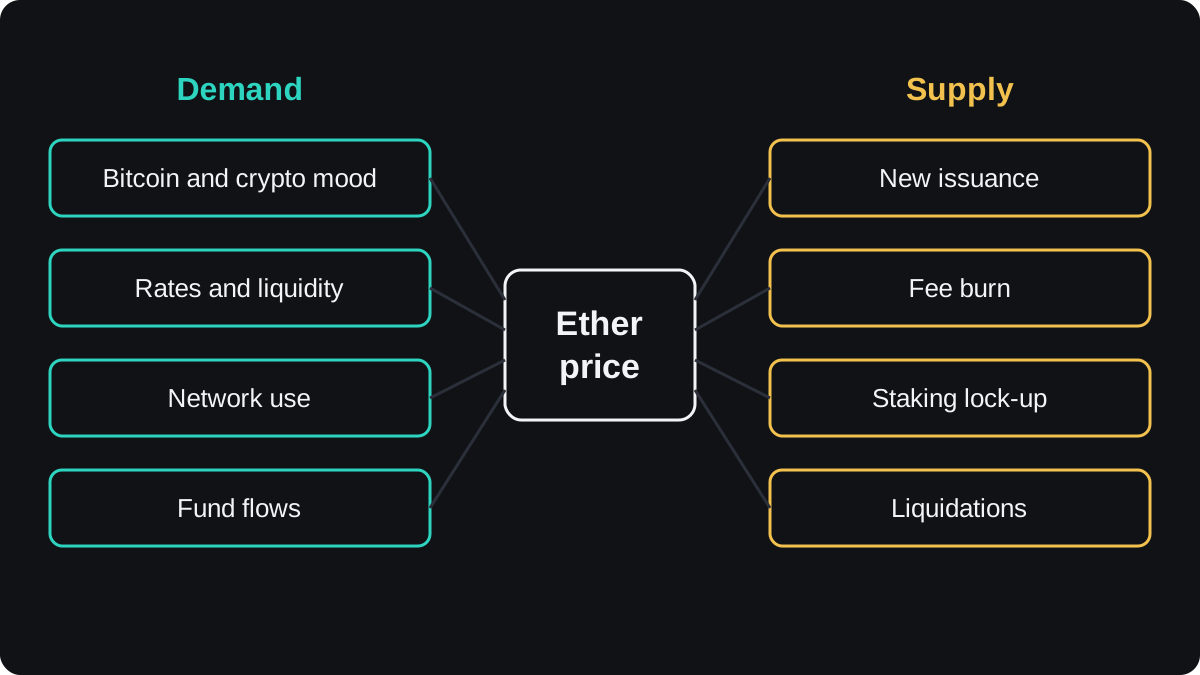
Bitcoin and the wider crypto market
Ether rarely moves alone. When bitcoin falls hard, ether usually falls with it, and often further. The same traders and funds hold both, so news that changes their mood hits both prices.
Say ether tends to move 1.5 times as far as bitcoin, so a 10% bitcoin fall goes with about a 15% ether fall. Traders call that ratio ether's beta to bitcoin. The numbers are illustrative.
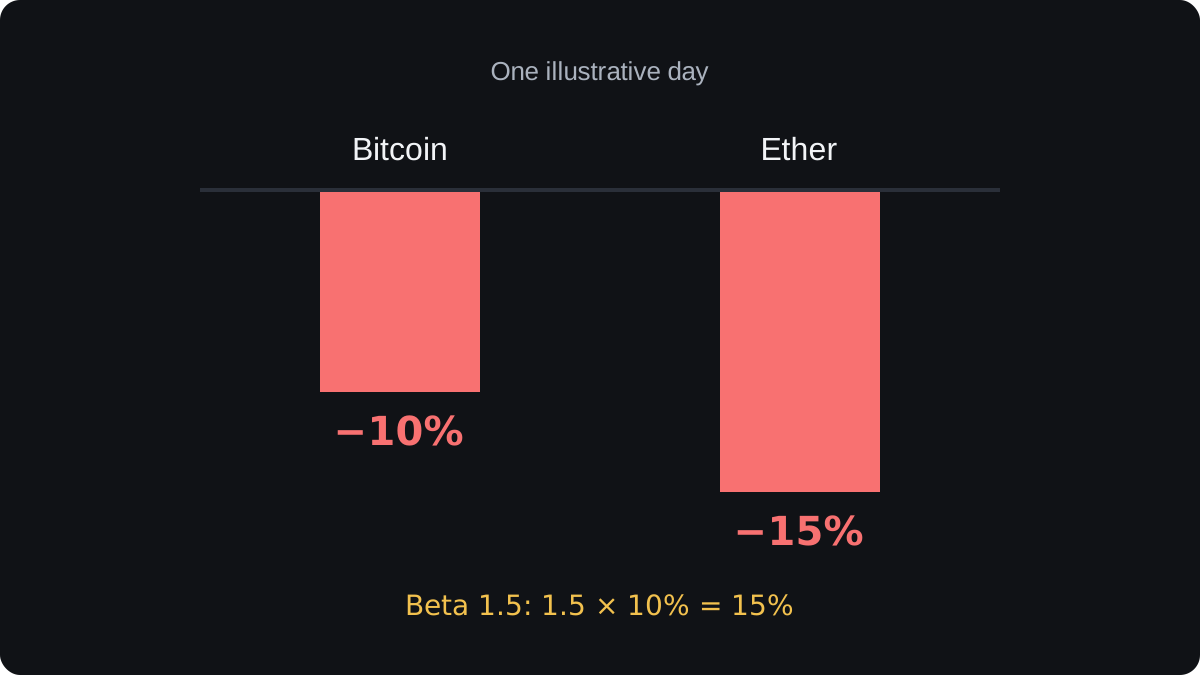
The link is loose and shifts over time. Ether can also gain or lose against bitcoin, which traders follow through the ETH/BTC price and Bitcoin dominance.
Interest rates, liquidity and risk appetite
Crypto trades like a high-risk asset. When interest rates are expected to fall and money is easy to borrow, investors tend to buy riskier things, and ether has often gained.
When rates rise or markets panic, the opposite tends to happen, the pattern forex traders call risk-on and risk-off. Large sell-offs in stocks have often come with falls in crypto.
These links are tendencies. They can fade for months, and a crypto event can override them in a day. The lesson on crypto and the economy goes deeper.
Network use, supply and upgrades
Some drivers belong to Ethereum alone. Heavy use of the network means more ether is needed for gas and more is burned, as the lesson on ether shows. When activity falls, the burn drops and supply grows faster.
Staking matters too. Ether locked by validators is off the market, while a long queue of validators waiting to exit can mean more coins about to become free to sell.
Major upgrades draw attention before they happen. Prices have sometimes risen into an upgrade and fallen after it, and sometimes not, so the date alone tells you little.
News can move ether in minutes, such as a large hack or a change in how a big economy regulates crypto. Competition from other blockchains works slowly, through where users and developers choose to go.
Fund flows and large holders
In the US, exchange-traded funds that hold ether have traded since 2024. When investors put money in, a spot ether ETF buys ether, and when they take money out, it sells.
Traders also track ether moving onto and off exchanges. A large deposit can mean a holder getting ready to sell, though there are other reasons to move coins, as exchange flows explains.
Large holders, such as funds and early investors, can move the price when they trade in size. Flow data shows demand after the fact, and a day of inflows does not promise a rise the next day.
Leverage and liquidations
Much ether trading happens in derivatives, often with leverage. Leverage turns small price moves into big gains and losses, and it can make the price itself move faster.
Here is an illustrative long position:
- A trader buys $10,000 of ether exposure with $1,000 of their own margin, which is 10 times leverage.
- Ether falls 5%. The position loses $500, half the margin.
- Ether falls 10%. The loss would be $1,000, all of the margin, so the exchange closes the position before it gets there.
That forced close is a liquidation, much like a stop out at a forex broker. Closing a long position means selling, and that selling pushes the price toward the next trader's liquidation level.
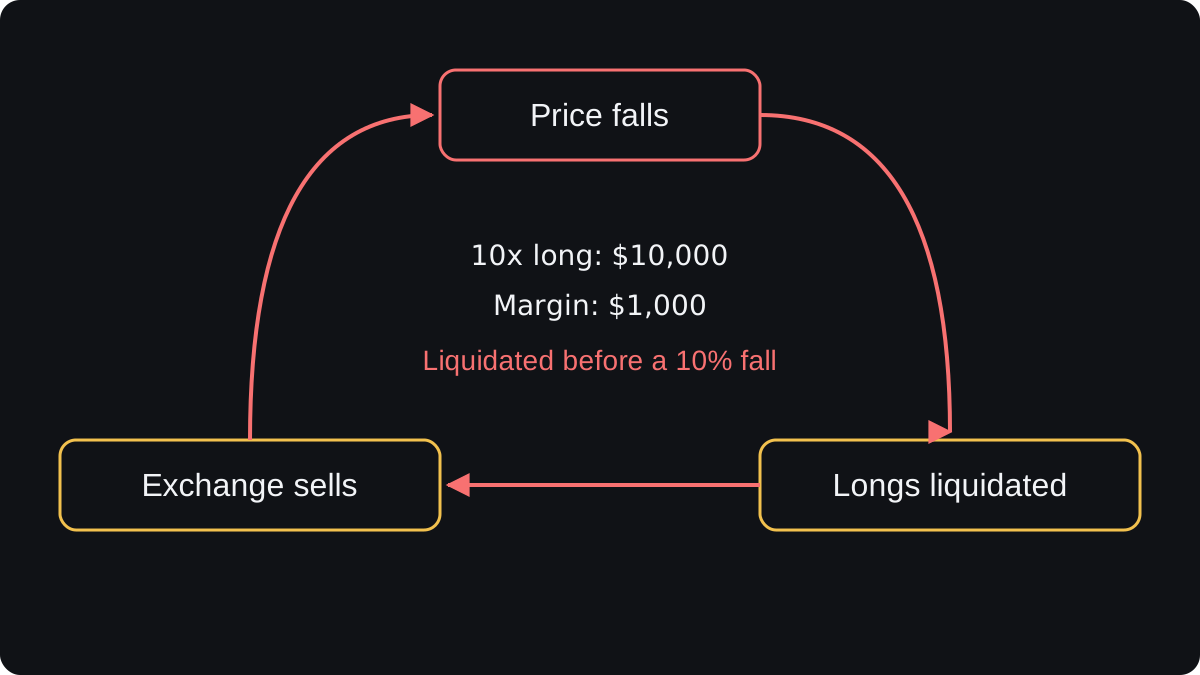
When many positions sit at similar levels, one wave of forced selling sets off the next. The same happens upward when short positions are forced to buy back.
Crypto also trades at weekends, when fewer people are trading and orders are thinner. A cascade that starts then can travel further before buyers step in.
คำถามที่พบบ่อย
Why does ether follow bitcoin?
Bitcoin has long been the largest crypto asset by market value, and the same traders and funds hold both. News that changes their appetite for risk moves the two prices together much of the time.
Does burning ether push the price up?
Not by itself. Burning shrinks supply only when it outpaces issuance, and the price still depends on demand, so a shrinking supply can still meet a falling price.
Do Ethereum upgrades move the price?
Sometimes, around the event, but the direction is not reliable. A well-known upgrade is often already reflected in the price by the time it happens.
Why is ether so volatile?
It trades around the clock with a lot of leverage, and there is no agreed way to value it. That lets changes in mood move the price quickly.
เรียนต่อ
 บทที่ 3What is Ethereum?Ethereum is a public blockchain that records balances and also runs programs called smart contracts. Anyone can use it or build on it without asking permission. Its own currency, ether (ETH), pays the fee for every action. Since 2022 the network has been secured by proof of stake instead of mining.
 บทที่ 3What is a smart contract?A smart contract is a program stored on a blockchain such as Ethereum. It holds funds and follows fixed rules: when someone calls it and the conditions are met, it acts automatically, with no company in the middle. It cannot see outside data on its own, and a bug can lose money for good.
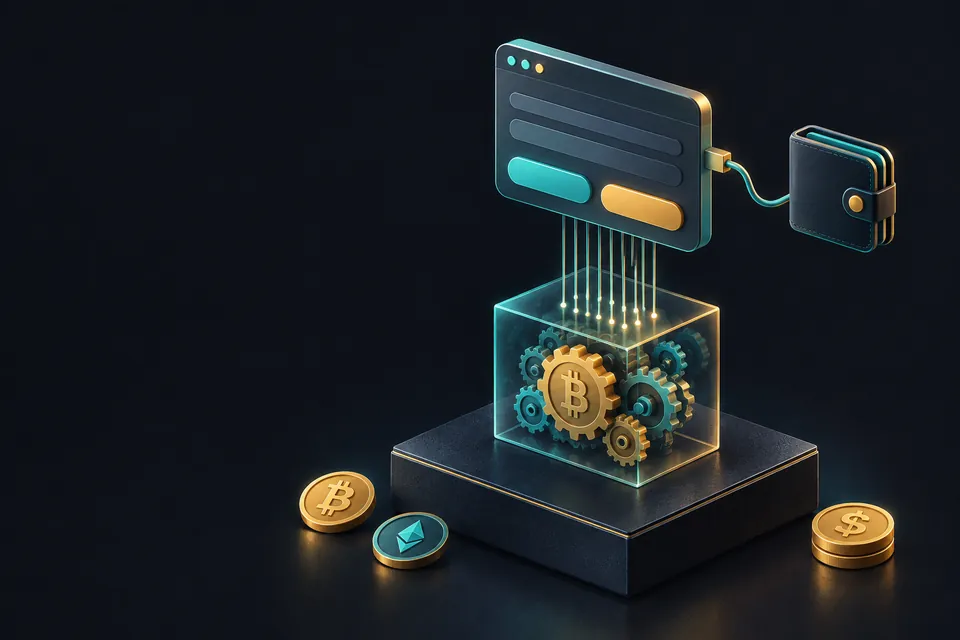 บทที่ 3What is a dApp?A dApp, short for decentralized application, is an app whose core rules run as smart contracts on a blockchain instead of on a company's servers. You use it through a website and a crypto wallet that signs each action. No company holds your funds, so contract bugs, fake sites and fees are yours to manage.
 บทที่ 3What is ether, and why does it have value?Ether (ETH) is the native currency of the Ethereum network. Every transaction pays its fee in ether, and validators lock it up as a deposit to secure the network. Its value comes from that demand meeting a supply with no fixed cap, which grows through new issuance and shrinks when fees are burned. Nothing guarantees its price.

