What is forex trading?
Forex trading is exchanging one currency for another, either because a business needs the currency or to profit from a change in the exchange rate. Prices are quoted in pairs such as EUR/USD, with a bid to sell at and an ask to buy at. Forex turnover averaged $9.5 trillion a day in April 2025.
이 내용은 현재 영어로만 제공됩니다.
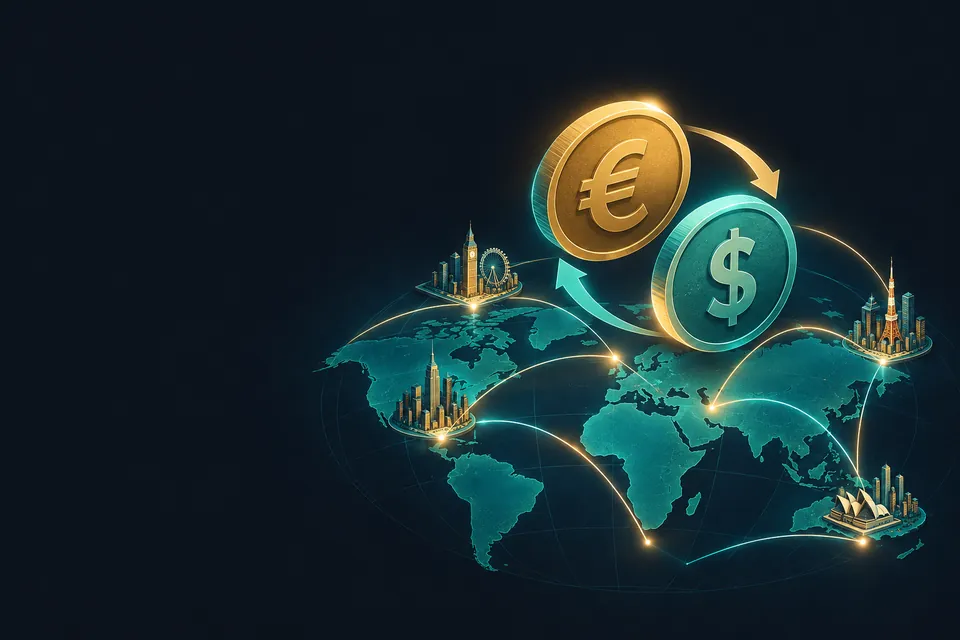
A carmaker in South Korea sells its cars in Germany and is paid in euros. Its wages and supplier invoices fall due in won, so the euros are no use to it until they have been exchanged.
Its bank quotes an exchange rate, the price of one currency in terms of another, and pays out won for the euros. If that rate has moved since the cars were priced, the same invoice can bring home fewer won.
Foreign exchange, shortened to forex or FX, is the exchange of one currency for another. Firms, funds, central banks and private traders do it every working day, for different reasons and in very different sizes.

What counts as forex trading?
The carmaker exchanges currency because its business requires it. It needs won to meet its bills and has no view on where the euro is heading.
As a private trader you start from the other end, with no invoices in either currency. You buy one currency against another because you expect the exchange rate between them to change, and that change is all you want.
Both count as foreign exchange, but "forex trading" usually means the second: dealing for the price move, with no need for the currency itself.
The two also end differently. The carmaker finishes with won in its bank account. On a retail forex account, the kind a private trader holds, no currency is delivered at any point.
Your open trade, called a position, is usually a contract for difference (CFD), under which your broker, the firm that runs your account, pays or charges you the change in price, in cash. You can therefore sell a currency you do not own.
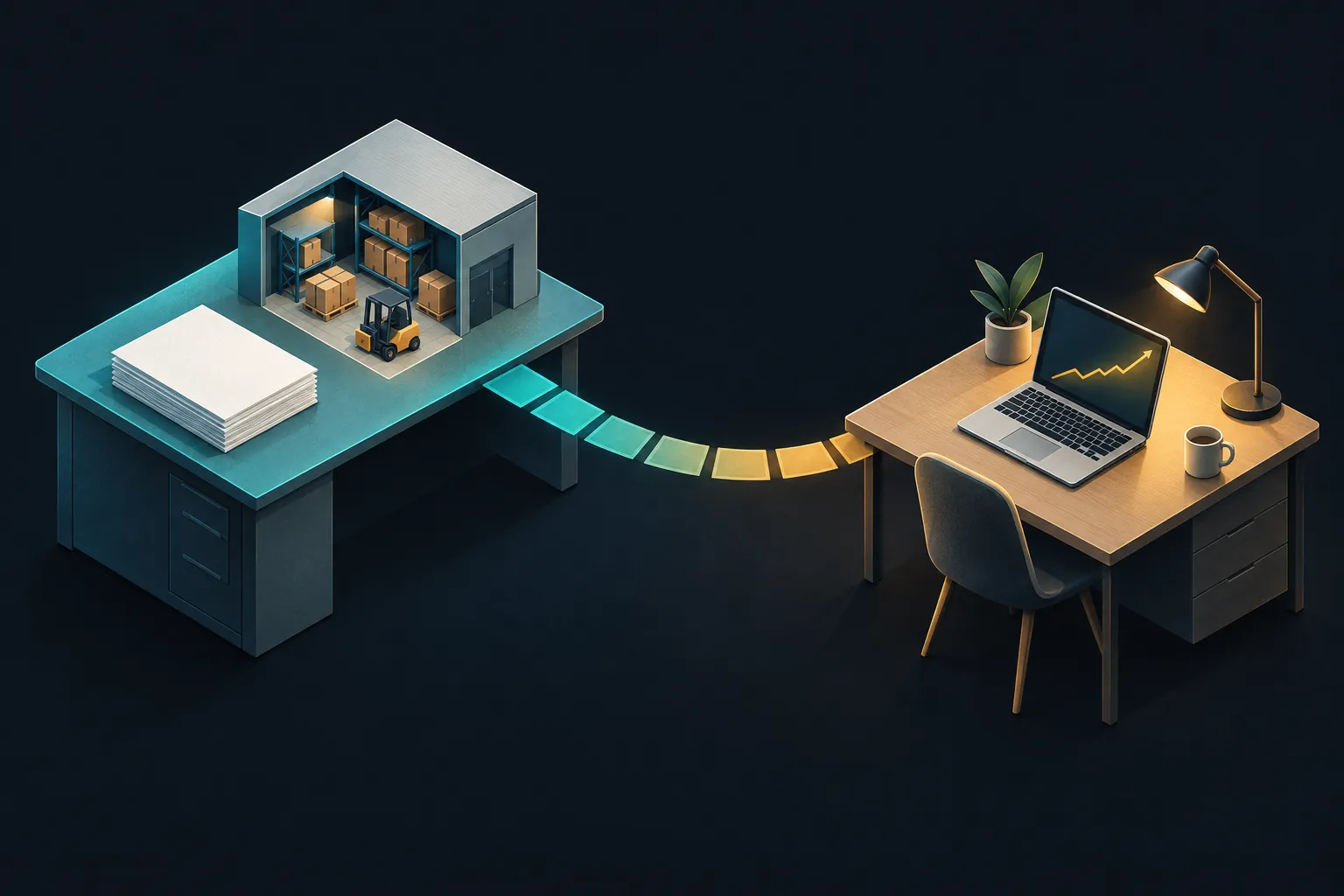
What is traded in forex compares a bank exchange and a CFD for the same sum of euros.
How do you read a forex quote?
Currencies are quoted in currency pairs, because a currency has a price only in terms of another one.
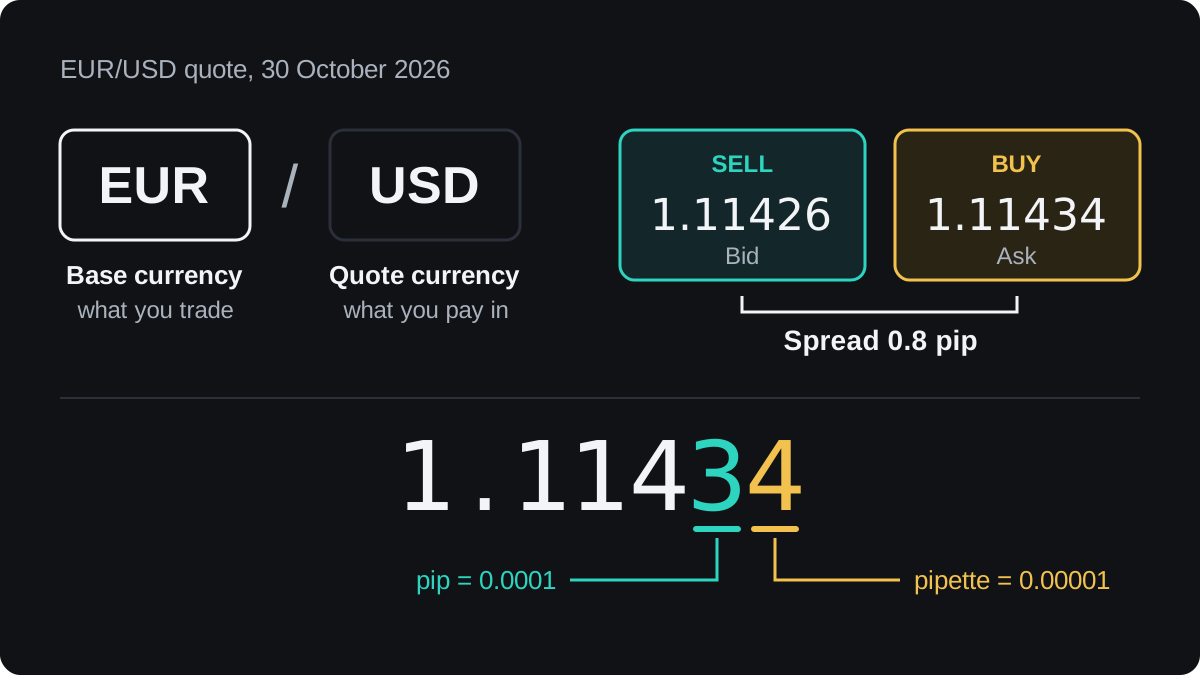
In EUR/USD, EUR is the base currency, the one being priced, and USD is the quote currency, the one the price is written in. A price of 1.11434 means one euro costs 1.11434 US dollars.
A trading screen shows two prices for each pair, such as EUR/USD 1.11426 / 1.11434.
The lower is the bid, the price at which you can sell the base currency. The higher is the ask, the price at which you can buy it. Bid and ask explains why the two differ.
The gap between them is the spread, the ask minus the bid. It is a cost on every trade, because you buy at one price and sell at the other.
A pip, the standard unit of price movement, is 0.0001 on EUR/USD and 0.01 on pairs quoted in Japanese yen. A pipette is a tenth of a pip, the fifth decimal place on EUR/USD.
The picture below marks each part of the quote.
Read the quote in four steps:
- EUR is the base currency, so the quote prices one euro in US dollars.
- You can sell one euro at the bid, 1.11426 dollars, or buy one at the ask, 1.11434 dollars.
- The spread is 1.11434 minus 1.11426, which is 0.00008.
- One pip on EUR/USD is 0.0001, so 0.00008 is 0.8 pip, or eight pipettes.
This was a real quote, shown on AutoFXRebate's market overview at 14:25 UTC on 30 October 2026. Prices change all day, so the figures on your screen will differ. Pips shows what one pip is worth in money.
Why do currencies change hands?
Most deals come from one of five motives.
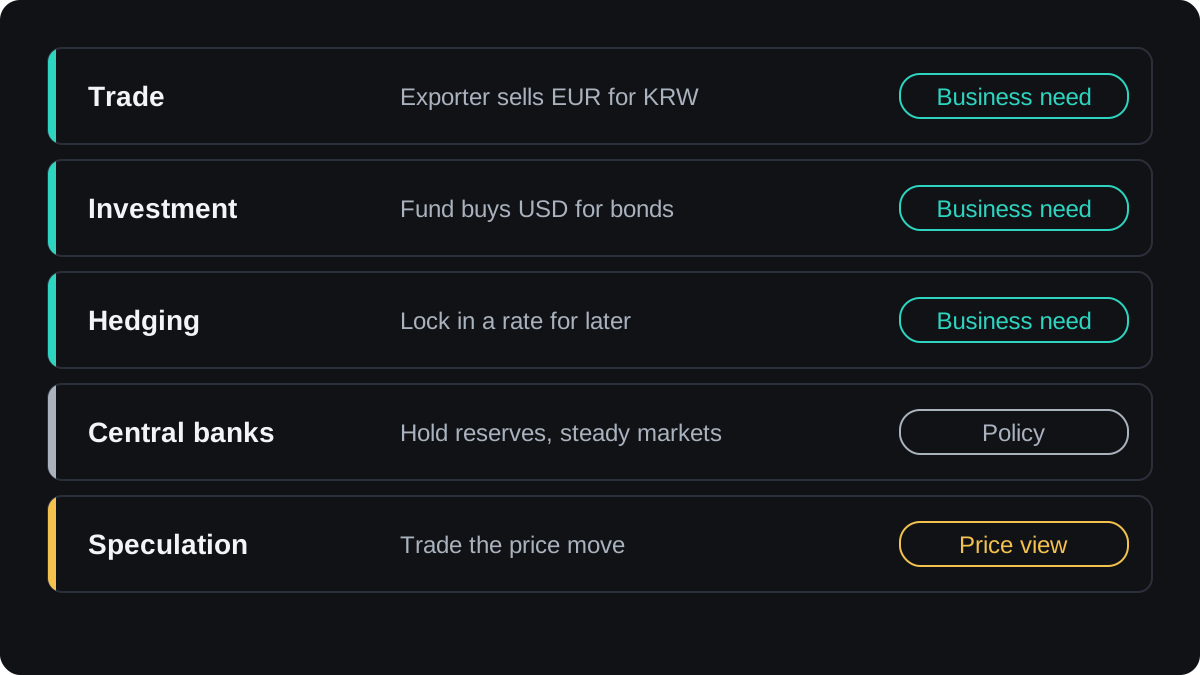
Trade is the simplest. The carmaker sells euros for won, and a German importer paying a Korean supplier does the reverse.
Investment needs currency too. A pension fund in Japan has to buy dollars before it can buy US government bonds, and sell them again if it brings the money home.
Hedging means taking a position that offsets a risk you already carry. A carmaker expecting euros in six months can deal an outright forward, a rate fixed now for one exchange on a later date, so a weaker euro cannot cut its income in won.
Central banks hold reserves, stocks of foreign currency kept for later use. Occasionally one buys or sells currency to steady its own, a step known as intervention.
Speculation is dealing for a price change with no risk to offset. Retail traders do this, and so do hedge funds.
A hedger and a speculator can place the same order on the same morning. The hedger's order offsets a risk it already carries, and the speculator's order creates a new one.
Is buying EUR/USD a bet on the euro?
Only in part. A pair has two legs, one for each currency, and its price moves when either leg moves.
Being long means holding a position that gains if the price rises; being short means holding one that gains if it falls. A long EUR/USD position is long the euro and short the dollar at the same time.
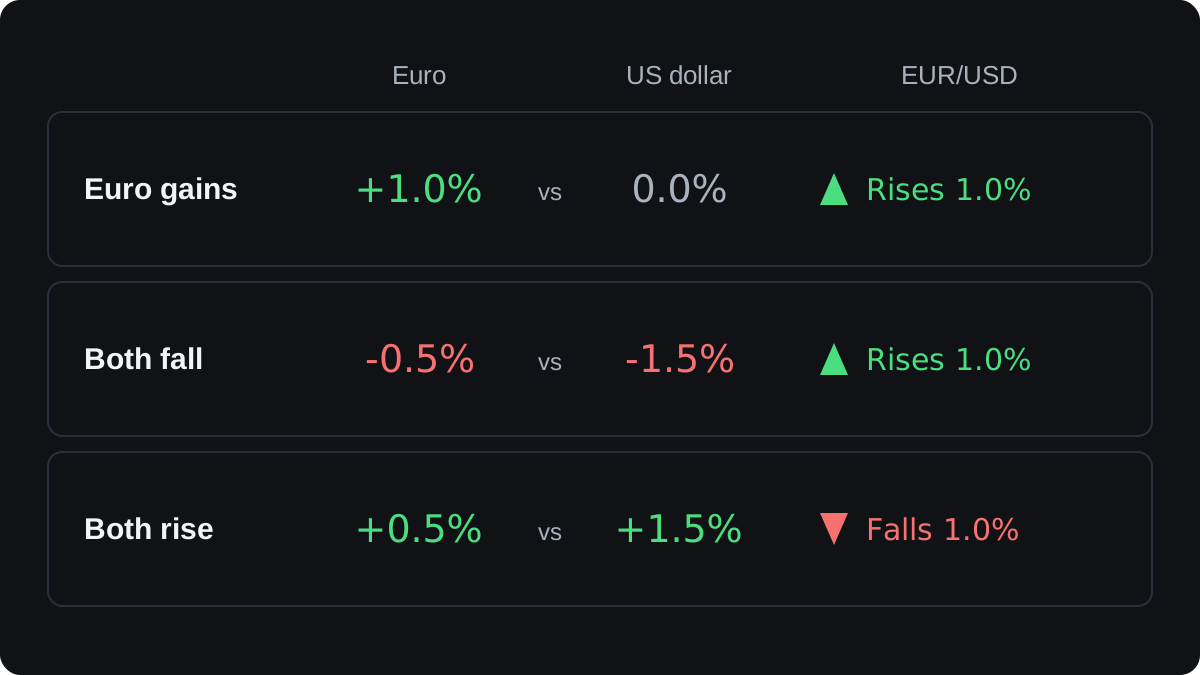
In the first row, the euro appreciates, meaning it gains value against other currencies, while the dollar stays flat, so the pair rises by the same 1.0%.
In the second, the euro depreciates, meaning it loses value, yet the pair still rises because the dollar loses more. The third is the reverse: both appreciate, the dollar by more, and the pair falls.
The price of the pair does not tell you which leg moved. To find out, compare each currency against a third, as in EUR/JPY and USD/JPY.
How large is the market, and how much of it is retail?
The size of the market is measured in turnover, the gross notional of new deals. Notional is the face amount a contract is written on. Each deal counts in full, so a bank renewing the same funding daily adds to the total every time.
The standard source is the Triennial Central Bank Survey from the Bank for International Settlements (BIS), which gathers figures from more than 1,100 dealers, firms that quote both a buying and a selling price, in 52 jurisdictions.
Its final results, published in June 2026, put turnover at $9.5 trillion a day in April 2025, up 27% from $7.5 trillion in April 2022. They replace a preliminary estimate of $9.6 trillion from September 2025.
Most of the total comes from two kinds of deal used by banks, funds and companies. The FX swap, an exchange now paired with the reverse exchange later, made up $4.02 trillion (42%), and the outright forward $1.75 trillion (18%).
Two smaller numbers matter more to a private trader.
Spot, an exchange at today's rate, was $2.95 trillion a day, 31% of the total. It settles on the value date, the day the currencies change hands, within two business days (T+2 on most pairs).
Retail-driven trading was $242 billion a day (2.5%), of which $109 billion was spot. BIS uses the term for private individuals trading for their own account: speculative, cash-settled and leveraged, with only part of the value put up.
The figure covers what dealers identified, which may not be every retail trade.
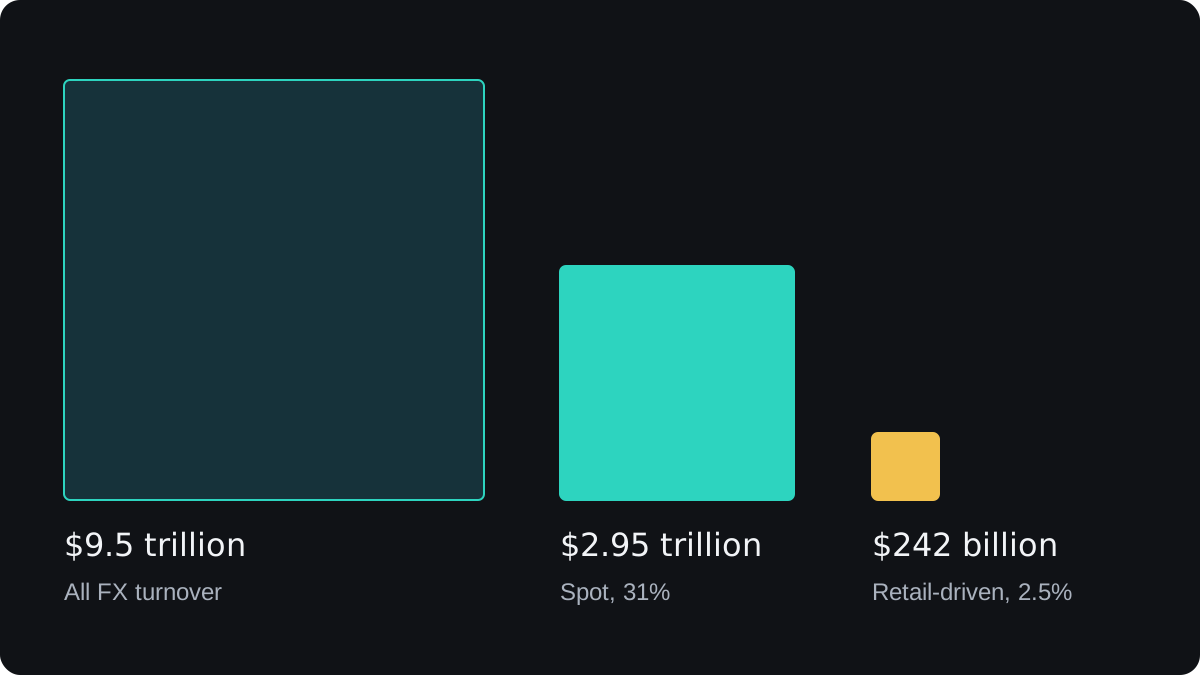
The lesson on how big the forex market is breaks the figure down by instrument.
Where is forex traded?
Forex has no central exchange, so no single list of orders holds every bid and ask for a pair.
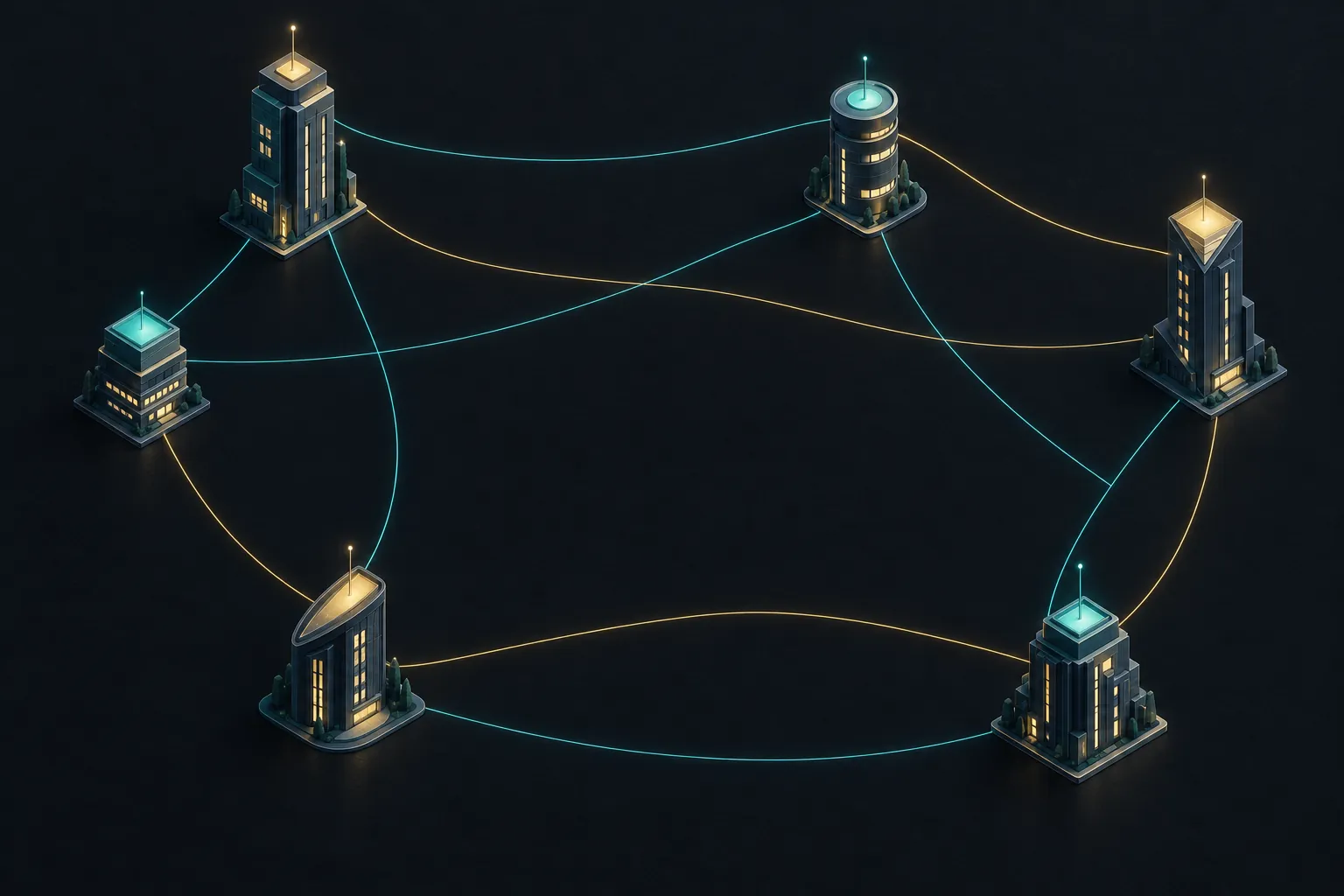
Most deals are over the counter (OTC): two parties strike them directly, usually with a dealer on at least one side. Each party is the other's counterparty, the firm on the opposite side of the deal.
Each dealer sets its own bid and ask from the orders it sees and the risk it carries. At any moment EUR/USD therefore has many quotes, close together but not identical, and 1.11426 / 1.11434 was one of them.
A retail broker sits between you and this network. It builds its quote from the prices it receives and sets a spread for each account type.
Your CFD is with the broker, so the broker is your counterparty, whether it keeps the risk or passes it on. Ways to trade forex sets out the chain from dealer banks down to your account.
When is the forex market open?
By market convention the trading week runs from Sunday 17:00 to Friday 17:00 New York time. No regulator sets those hours. The market is closed at weekends, so Sunday's first price can differ from Friday's last.
In between, trading runs round the clock and passes from one financial centre to the next: Sydney and Tokyo, then London, then New York.

Liquidity, how easily you can trade without moving the price much, is not the same at every hour. It depends on how many firms are quoting, and when fewer quote, spreads widen.
That happens for a short time around 17:00 New York time, the daily rollover, when open positions move to the next value date.
The market hours tool shows each centre's hours in your own time zone.
One trade, start to finish
This example buys EUR/USD, so the position is long, and follows it from open to close, starting from the real quote above.
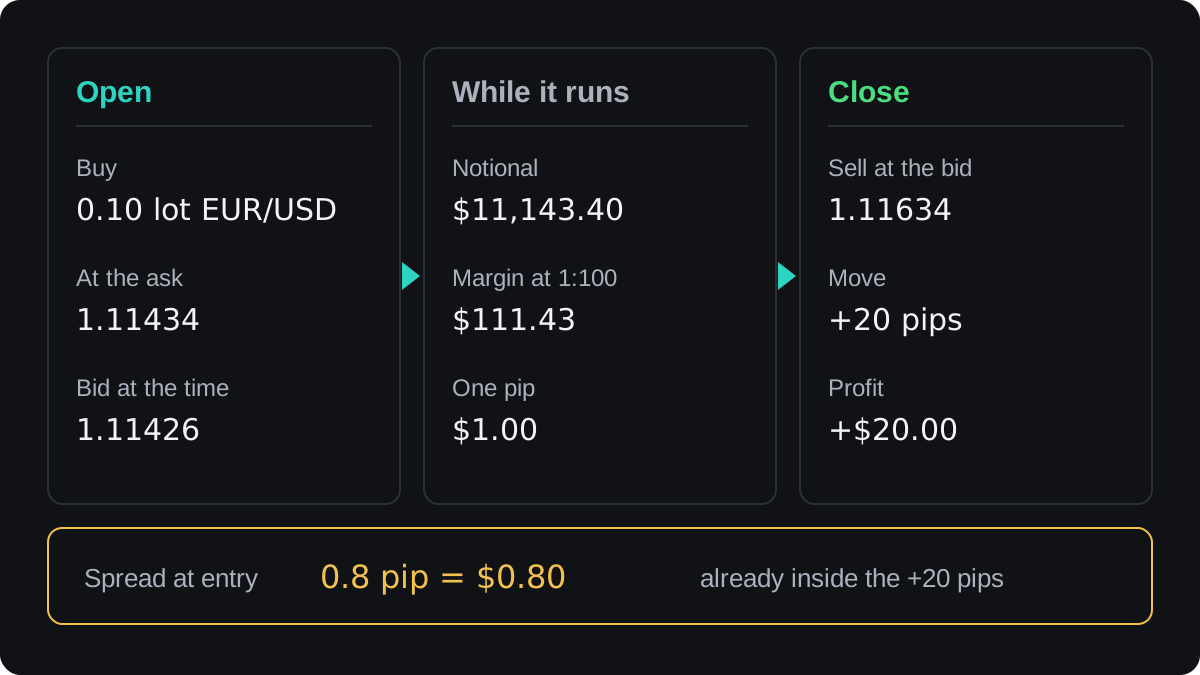
- You expect the euro to appreciate against the dollar and buy 0.10 lot of EUR/USD. One lot is 100,000 units of the base currency, so this lot size is 10,000 euros.
- You buy at the ask, 1.11434, with the bid at 1.11426.
- The notional, the face amount of the contract, is 10,000 × 1.11434 = $11,143.40.
- Margin is the money held to keep the position open, and leverage is the ratio of notional to margin. At 1:100, margin is $11,143.40 ÷ 100 = $111.43.
- One pip on this size is worth 10,000 × 0.0001 = $1.00, so closing at once at the bid of 1.11426 would lose 0.8 pip, $0.80.
- Later the bid reaches 1.11634 and you sell there to close. 1.11634 minus 1.11434 is +0.00200, which is +20 pips, or +$20.00.
The $0.80 spread is already inside that result, because you bought at the ask and sold at the bid.
Had the bid fallen to 1.11234 instead, closing would give 1.11234 minus 1.11434, which is -0.00200, or -20 pips and -$20.00.
The 1:100 is an example, because the leverage on offer depends on broker and regulator. Leverage changes the margin and leaves the pip value at $1.00.
These results leave out any commission or overnight charge. Buying and selling a currency pair follows long and short trades in full.
An introducing broker is a firm that refers clients to a broker and earns a commission on their trades. A rebate passes part of that commission back to you, paid by the broker into your trading account.
AutoFXRebate is one such firm and never holds client money. Its rate table showed up to $8.10 per lot on EUR/USD on 30 October 2026, so up to $0.81 on this 0.10 lot.
The rate depends on the broker and account type, and the spread on that account can differ from the quote above. Compare spreads shows measured figures.
자주 묻는 질문
What is forex trading in simple words?
It is exchanging one currency for another, either because you need it or to profit from a change in the exchange rate. A trader expecting the euro to appreciate against the dollar buys EUR/USD; one expecting it to depreciate sells.
What does EUR/USD 1.11434 mean?
One euro costs 1.11434 US dollars. EUR is the base currency and USD the quote currency, so profit or loss on the pair is worked out in dollars first.
Does the forex market ever close?
Yes, at weekends. It trades round the clock from Sunday 17:00 to Friday 17:00 New York time, though liquidity is not equal across those hours.
Is forex a scam?
No. Exchanging currency is ordinary business for banks and companies. Fraud does occur around retail trading, so check a broker's licence on the regulator's own website before you deposit.
How much money do I need to start?
There is no fixed amount: it depends on your broker, trade size and leverage. The 0.10 lot example held $111.43 of margin at 1:100, but a 20-pip fall would lose $20.00, so the account must cover losses as well as margin.
이어서 배우기
 챕터 1What is traded in the forex market?The forex market trades currencies, always two at a time: every deal buys one and pays with another. Eight are known as the majors, and the US dollar was on one side of 89% of turnover in April 2025. A retail trader receives no currency and instead holds a cash-settled contract with a broker.
 챕터 1How does buying and selling a currency pair work?Buying a currency pair buys the first currency and sells the second, so you gain if the price rises. Selling does the opposite and gains if it falls. A buy opens at the ask and closes at the bid, and a sell does the reverse. Profit and loss land in the quote currency.
 챕터 1How big is the forex market, and what is liquidity?Forex turnover averaged $9.5 trillion a day in April 2025, in the final results of the BIS Triennial Survey. The figure adds up the face value of new deals. Liquidity is how easily you can trade without moving the price. In AutoFXRebate's measurements, EUR/USD spreads held steady through the sessions and widened sharply at the daily rollover.
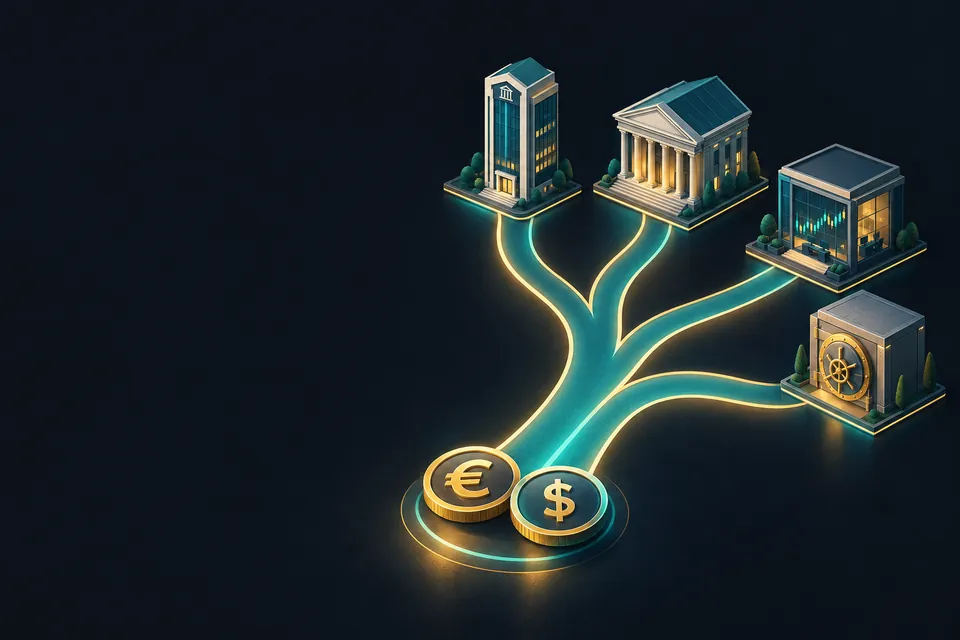 챕터 1Ways to trade forex: spot, forwards, swaps, futures, options and CFDs.Currencies change hands as spot deals, outright forwards, FX swaps, currency swaps, options and futures. Spot settles within two business days, a forward fixes a rate for a later date, and an FX swap pairs an exchange now with its reverse later. Retail traders usually trade CFDs or rolling spot, cash-settled contracts with a broker.

