What is a meme coin?
A meme coin is a cryptocurrency built around a joke, a mascot or an internet meme, with no product, revenue or reserve behind it. Its price moves on attention and community. Dogecoin, launched in 2013, was the first well-known one. Meme coins can multiply in days and lose most of their value just as fast.
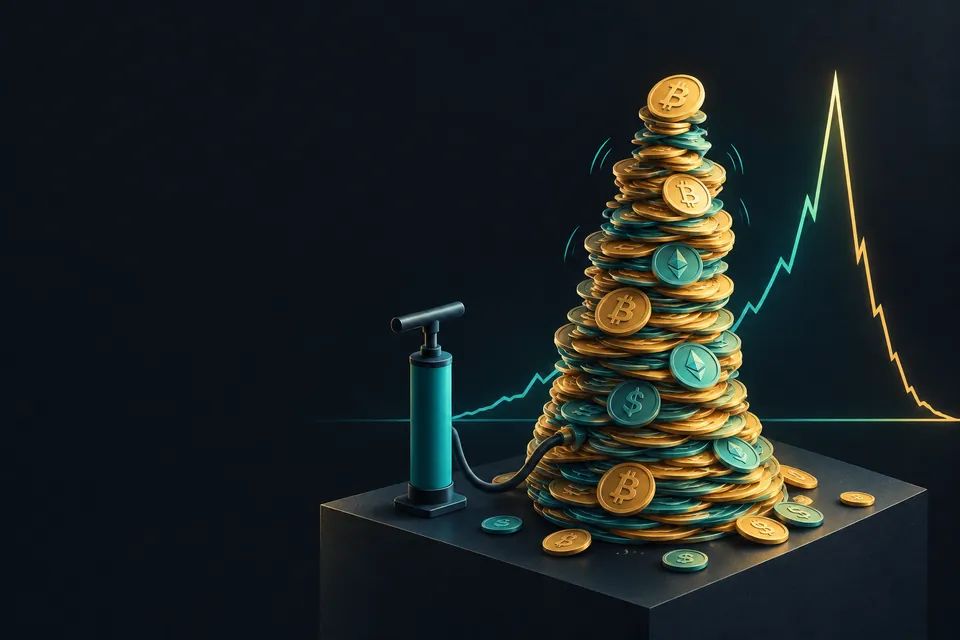
Dogecoin started in 2013 as a parody of the crypto boom, with a Shiba Inu dog from a popular meme as its mascot.
The joke grew into one of the larger coins by market value. It also started a whole category of coins built on jokes.
What makes a coin a meme coin
A meme coin is a token whose value rests on attention and community, with no product, cash flow or reserve behind it. Its story is a joke or a mascot, and the crowd that shares it online.
Most meme coins have a huge supply and a tiny price per coin. Their holders promote them on social media, and that promotion is most of what moves the price.
Some later pick up uses, such as tipping or small payments. The price still tracks attention far more than use.
Why the price per coin looks tiny
Meme coins often launch with supplies in the hundreds of billions or trillions. Spread across that many coins, even a large total value gives a price with many zeros after the decimal point.
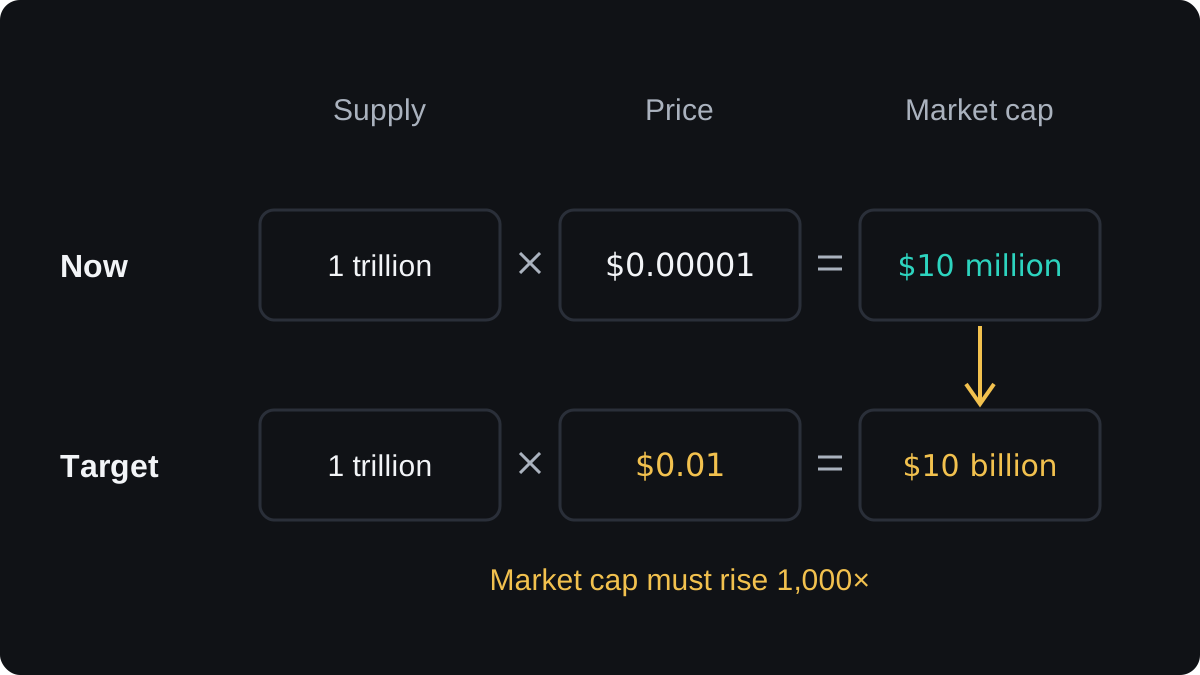
Here is an illustrative example. A token has 1 trillion coins in circulation and trades at $0.00001.
- Its market cap is 1,000,000,000,000 × $0.00001 = $10 million.
- For one coin to reach just $0.01, the market cap would have to reach 1 trillion × $0.01 = $10 billion.
- That is a 1,000-fold rise in the total value of the coin.
The low price comes from the huge supply. It tells you nothing about whether the coin is cheap.
How a new meme coin launches
Anyone can now create a token in minutes on a low-fee blockchain. A typical launch goes like this:
- The creator mints a fixed supply, such as 1 billion tokens.
- They pair part of it with a main coin, such as ether, in a trading pool on a decentralized exchange. The pool sets the starting price.
- Trading bots and early buyers jump in within seconds.
- The token gets promoted in chats and on social media. As buyers take tokens out of the pool, the price climbs.
- At some point, early holders sell to the late buyers.
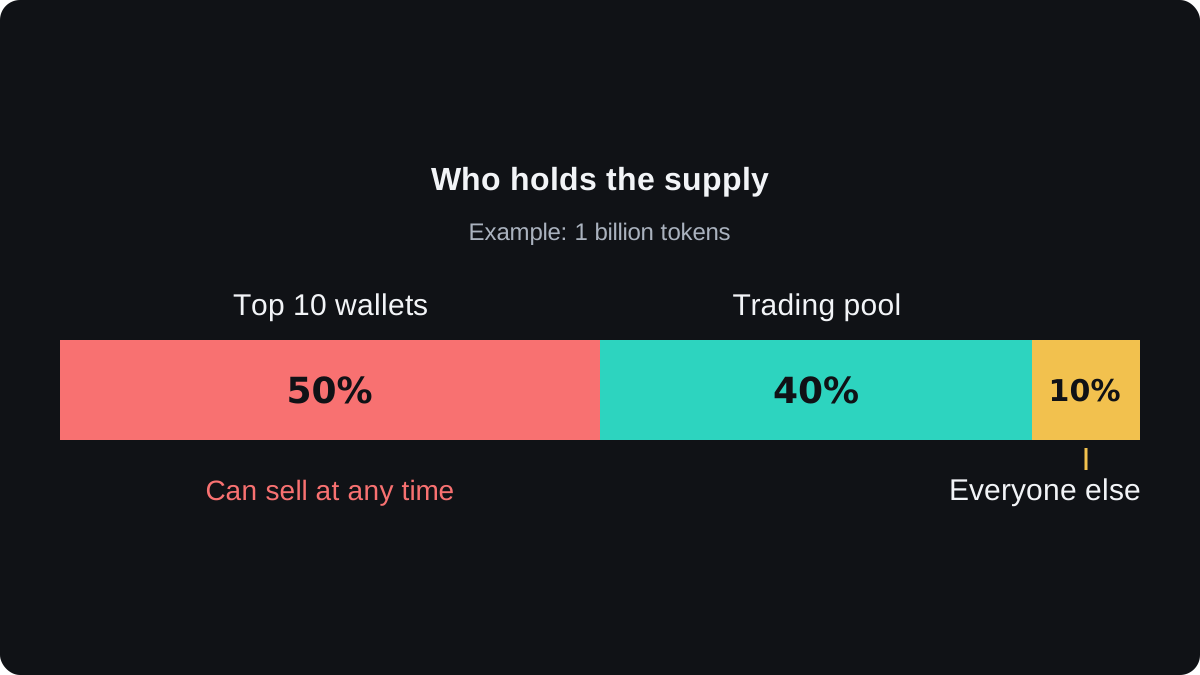
Who holds the supply matters as much as the price. Take a launch of 1 billion tokens, and say the top 10 wallets hold 50% of the supply, the trading pool holds 40%, and everyone else holds 10%.
Those 10 wallets can sell whenever they like. On a decentralized exchange, every token they sell goes into the pool, and the pool pays them in ether.
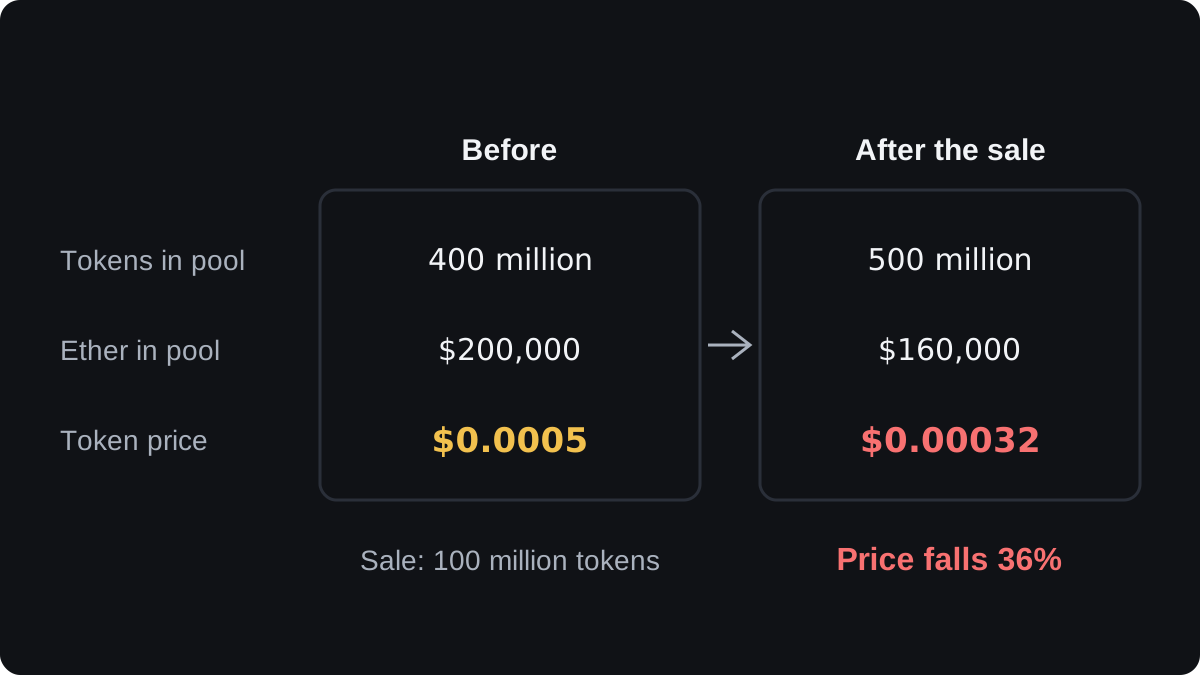
The size of the pool decides how far each sale moves the price. Most simple pools keep their two balances multiplied together at a constant, as the automated market maker lesson explains.
Here is a sale with round, illustrative numbers, ignoring fees:
- The pool holds the 40% from above, 400 million tokens, plus $200,000 of ether. The price is $200,000 ÷ 400 million = $0.0005.
- One of the top wallets sells 100 million tokens into the pool, which now holds 500 million tokens.
- To keep the product constant, the ether side drops to $200,000 × 400 million ÷ 500 million = $160,000. The seller receives $40,000.
- The new price is $160,000 ÷ 500 million = $0.00032, a 36% fall from a single sale.
Where meme coins go wrong
- In a rug pull, the creator withdraws the main coin from the trading pool. Holders are left with tokens that nobody can buy from them.
- A honeypot token has hidden code that lets you buy but blocks you from selling.
- Copycat tokens use the same name and ticker as a popular coin. Only the contract address tells them apart.
- Insiders promote a coin and sell into the buying they stirred up, a pattern covered in common crypto scams.
- Even with no fraud at all, a coin that runs on attention falls when attention moves on. No reserve or earnings slow the fall.
Checks before you trade one
- Get the contract address from the project's own channels and compare it with what your wallet or exchange shows.
- Look at the holder list on a block explorer. A few wallets holding most of the supply is a warning.
- Check whether the pool's liquidity is locked, and until when. A lock closes one way out for the creator, while selling a large share of the supply stays open to them.
- Size the trade as if it could go to zero, using the rules in position sizing for crypto.
Questions
Is Dogecoin a meme coin?
Yes. It was created in 2013 as a joke and is usually called the first meme coin, even though it later picked up uses such as tipping.
Are all meme coins scams?
No. Many launch openly as jokes, and a few have traded for years. They still share the same weak points: concentrated supply, thin pools and a price that runs on attention.
Why are meme coins so cheap?
Their supply is huge. A coin with 1 trillion units and a $10 million market cap trades at $0.00001, which says nothing about whether it is good value.
Keep learning
 Chapter 4What is an altcoin?An altcoin is any cryptocurrency other than Bitcoin. The name is short for alternative coin. Some altcoins run their own blockchain, like ether on Ethereum, while others are tokens issued on a chain that already exists. They range from large platforms to stablecoins and meme coins, and most trade in smaller, jumpier markets than Bitcoin.
 Chapter 4What is a stablecoin?A stablecoin is a crypto token designed to hold a steady price, usually one US dollar. Most are backed by reserves such as cash and short-term government debt, held by a company that swaps tokens for dollars at $1. Others lock up crypto as collateral or rely on supply rules. Every design can lose its peg under stress.
 Chapter 4What is a privacy coin?A privacy coin is a cryptocurrency that hides the details of a payment from outsiders: the sender, the receiver, the amount, or all of them. Bitcoin records these in public. Monero hides them by default with ring signatures and one-time addresses, while Zcash lets users choose shielded payments built on zero-knowledge proofs.

